March 5, 2026
Why Bradford Pear Trees Are a Problem in South Carolina
SEASONED TREE CARE
Why Bradford Pear Trees Are a Problem in South Carolina
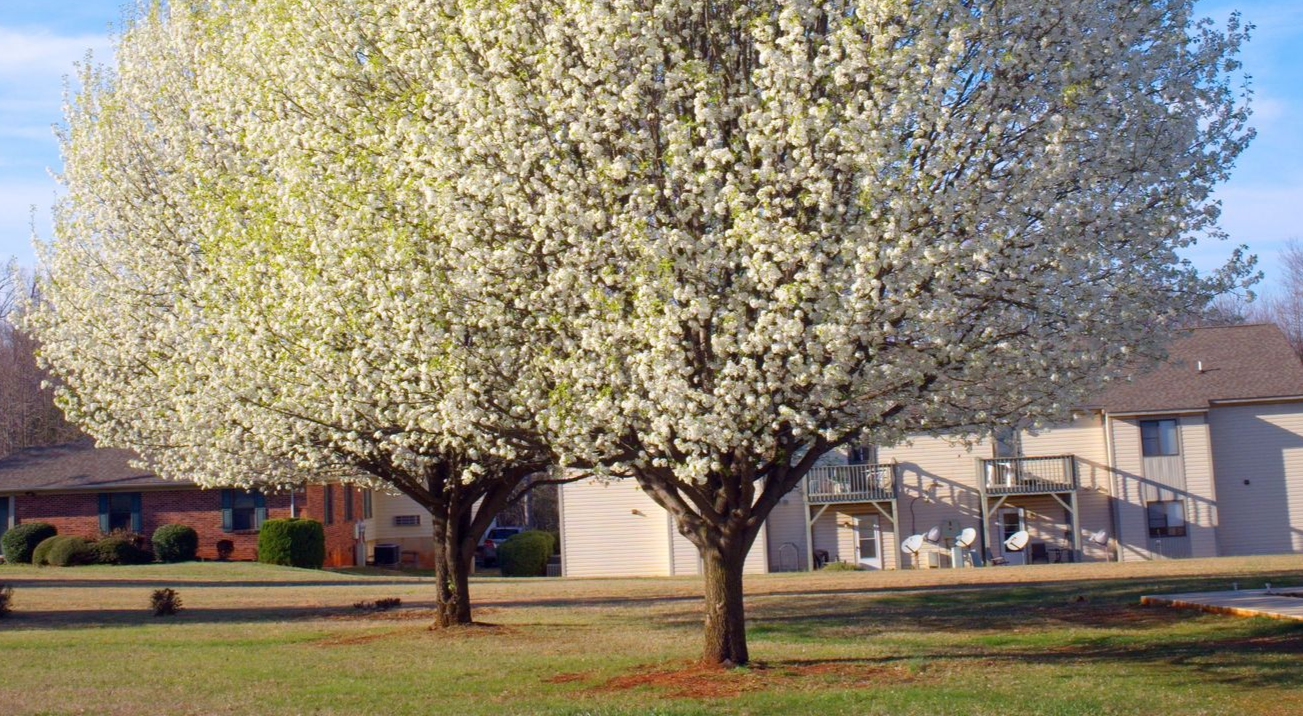
Bradford pear trees are common across South Carolina neighborhoods, driveways, yards, parking lots, and commercial properties. For years, they were planted because they grow fast, bloom white in the spring, and create quick curb appeal.
But many homeowners in Anderson, Greenville, Honea Path, Simpsonville, Seneca, Clemson, Easley, and surrounding Upstate SC areas are now realizing the downside.
Bradford pear trees are known for weak branch structure, storm damage, splitting, and spreading invasive Callery pear trees. A tree that looks beautiful for a few weeks in spring can become a serious problem when high winds, heavy rain, or age expose how weak it really is.
Bradford Pear Trees Split and Break Easily
One of the biggest issues with Bradford pear trees is their structure. The branches often grow close together at tight angles, which makes the tree weaker as it matures.
As the canopy gets larger and heavier, the tree becomes more likely to split during bad weather. In Upstate South Carolina, where storms, heavy rain, and wind are common, Bradford pears can break without much warning.
A Bradford pear can damage:
- Roofs
- Vehicles
- Fences
- Driveways
- Mailboxes
- Power lines
- Landscaping
- Nearby trees
Many homeowners do not think about removing a Bradford pear until part of the tree has already fallen. By then, the cleanup and damage may cost more than removing the tree before it failed.
Bradford Pears Can Become a Storm Hazard
If a Bradford pear is growing close to your home, garage, driveway, fence, or power lines, it should be taken seriously.
Warning signs include:
- The tree is leaning
- Large limbs are splitting
- Branches are hanging over the roof
- The trunk has cracks
- The canopy is too heavy on one side
- The tree has already lost limbs in past storms
- The tree is growing too close to a structure
A Bradford pear may look healthy because it still has leaves, but that does not mean it is structurally safe. Many Bradford pears fail because of how they grow, not because they are completely dead.
Bradford Pears Are Invasive in South CarolinA
Bradford pear trees are also a problem because they are connected to the spread of invasive Callery pear. Clemson University has reported that South Carolina moved to ban the nursery sale of Bradford pear and other pear trees grown on commonly used Callery pear rootstock, with the sales ban beginning October 1, 2024.
That means removing a Bradford pear is not only about improving your own yard. It can also help reduce the spread of an invasive tree that crowds out better native plants.
Clemson’s Bradford Pear Bounty Program
Clemson University and the South Carolina Forestry Commission also have a program called the Bradford Pear Bounty. The program encourages South Carolina property owners to remove Bradford pear trees and replace them with healthier native trees.
According to Clemson, any South Carolina resident can participate, but property owners are responsible for tree removal. Clemson also says homeowners should take a photo with the cut tree and bring it to the exchange event.
This program can be a great bonus for homeowners who already want to remove a Bradford pear from their property. You can get rid of a weak, storm-prone tree and potentially replace it with a better native option.
Seasoned Tree Care can help with the removal side of the process, including cutting down the Bradford pear, cleaning up debris, and grinding the stump if needed.
Before removing your tree for the program, make sure to check Clemson’s current registration rules and event details.
Should You Trim a Bradford Pear or Remove It?
Some Bradford pears can be trimmed, especially if they are young, small, and located away from structures. Pruning may help reduce weight, remove broken limbs, and improve clearance.
However, trimming does not fix the tree’s natural weak structure.
Removal may be the better option if the Bradford pear is:
- Mature and heavy
- Growing close to your house
- Splitting at the trunk
- Leaning toward a structure
- Damaged from a storm
- Dropping large limbs
- Too close to power lines
- Creating a safety concern
If the tree has already split once, there is a good chance it may continue to fail in the future.
What Should You Plant Instead?
After removing a Bradford pear, many homeowners choose to replace it with a stronger native or better-adapted tree. Clemson’s Bradford Pear Bounty program offers replacement trees through participating events, and Clemson lists several replacement tree options through the program.
Good replacement options may include trees such as:
- Serviceberry
- Redbud
- Dogwood
- Fringe tree
- Black gum
- Oak
- Maple
- Carolina silverbell
The best choice depends on your yard, sunlight, soil, and how much space the tree has to grow.
Do You Need Stump Grinding After Bradford Pear Removal?
After a Bradford pear is removed, the stump is often left behind unless stump grinding is included.
Stump grinding can help:
- Improve curb appeal
- Make mowing easier
- Remove a tripping hazard
- Clear space for new landscaping
- Prepare the area for a replacement tree
- Keep the yard looking clean
If you plan to replant, landscape, or sell your home in the future, stump grinding is usually worth considering.
Need Bradford Pear Tree Removal in Anderson or Greenville?
If you have a Bradford pear tree that is splitting, leaning, storm-damaged, or growing too close to your home, Seasoned Tree Care can help.
We provide professional tree removal, tree trimming, stump grinding, storm cleanup, and land clearing across Anderson, Greenville, Honea Path, Simpsonville, Seneca, Clemson, Easley, and surrounding Upstate South Carolina areas.
Whether you are removing a Bradford pear because it is dangerous, invasive, damaged, or part of Clemson’s Bradford Pear Bounty program, our team can safely handle the removal and cleanup.
Call Seasoned Tree Care today for a Bradford pear tree removal estimate.
ADDITIONAL BeaRS STORIES