Start here
Greenville County is one of the fastest-growing areas in the state, and most of that growth — a new home on acreage in Greer, a subdivision off the edge of Fountain Inn, a custom build in the foothills near Travelers Rest — starts the same way: clearing land. Done well, clearing sets up the whole project; done carelessly, it costs trees you wanted to keep and creates erosion and grading headaches later. Here's what to expect, and how to clear smart.
Section 01What land clearing really includes
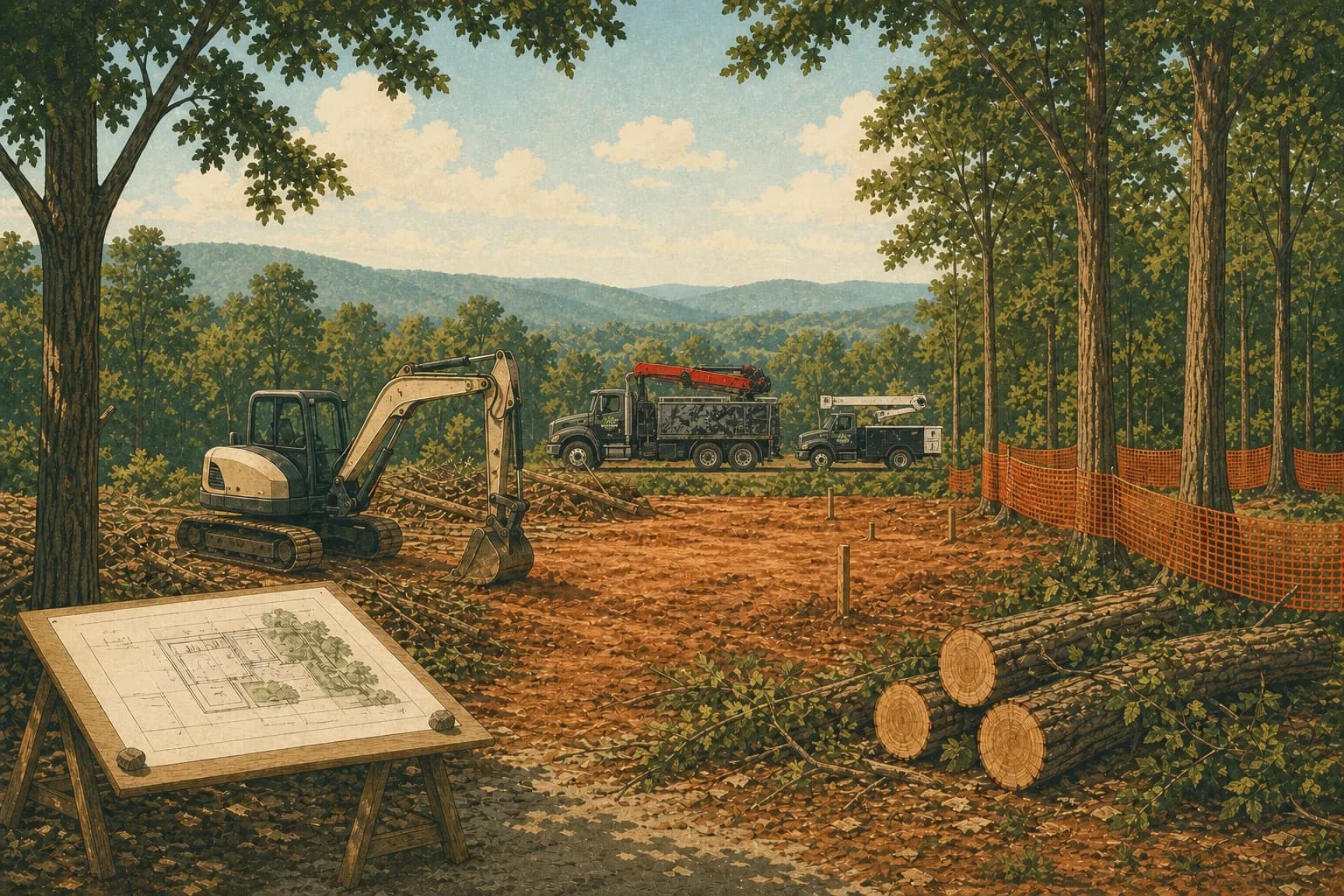
On a building site, clearing is a sequence of jobs, not a single one:
- Removing trees and brush within the footprint, driveway, and work/staging areas.
- Protecting the trees you're keeping (fencing the root zones before machines arrive).
- Processing material — chipping brush, cutting and loading logs.
- Handling stumps — grinding below grade or excavating, per the grading plan.
- Hauling off debris, and managing erosion on disturbed ground.
- Leaving the site in a condition the grading and foundation crews can build on.
Section 02Selective clearing beats clear-cutting
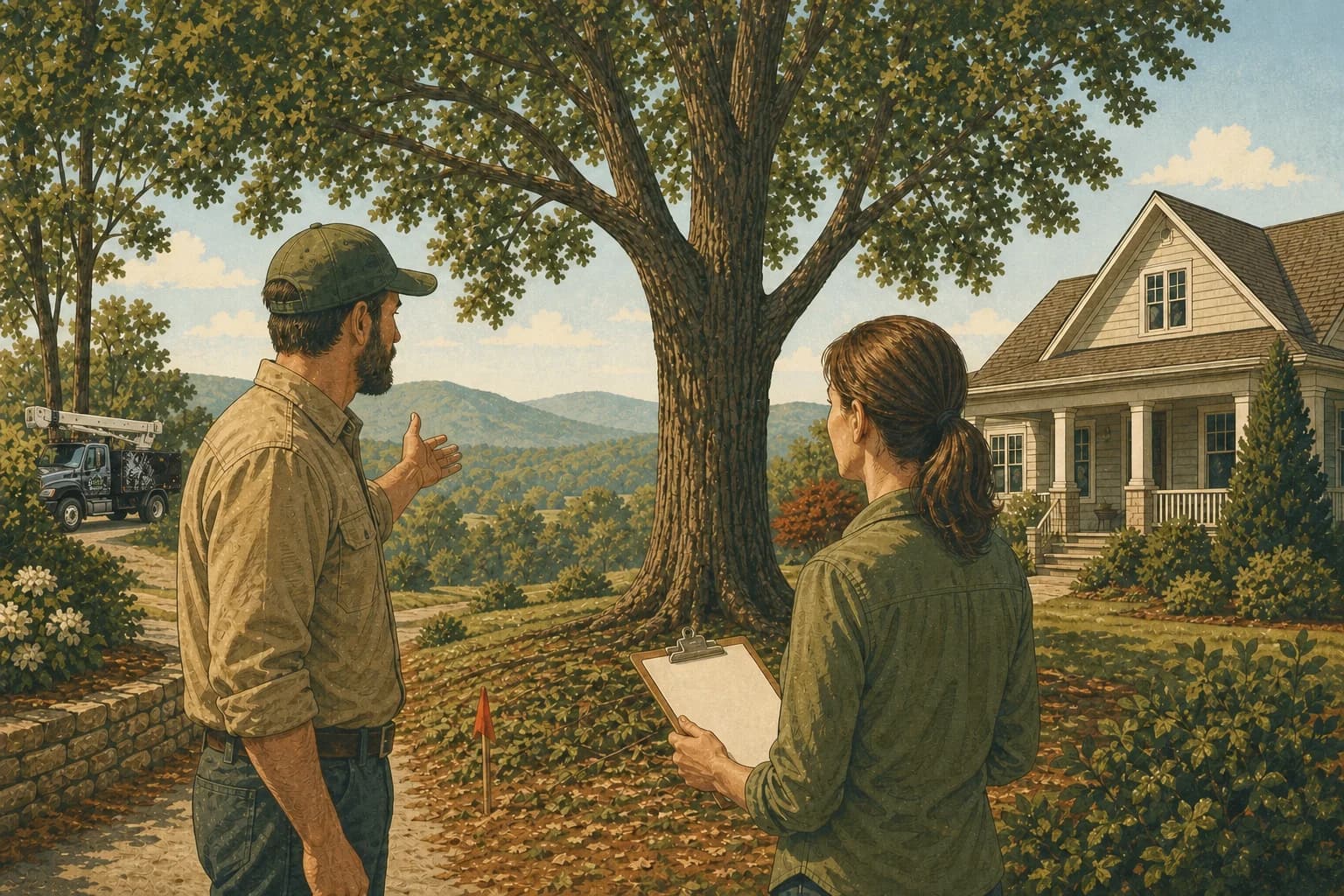
The instinct to scrape a lot flat is usually a mistake. A mature, healthy hardwood that's well-placed is an asset you can't buy — it takes decades to replace, and it adds real value, shade, and privacy to the finished property. Selective clearing opens what the build needs while keeping the trees worth keeping. It's also frequently what local landscape and buffer rules expect on development sites. The trick is deciding correctly which trees are genuinely keepers — sound, well-located, and likely to survive construction — and that's a judgment worth getting a professional's eye on before anything comes down.
Section 03Know the rules before the machines roll
Clearing for development is exactly where Greenville's tree regulations are most likely to apply. The county and incorporated cities may require tree protection, landscape buffers, and replacement plantings on development sites — requirements that wouldn't touch a homeowner removing one backyard tree. These are confirmed as part of project permitting, so check them up front; retrofitting compliance after you've cleared is expensive. Our companion guide on Greenville County tree permits covers the homeowner side of this in more detail.
Not sure what tree rules apply to your build? Start with our plain-English guide to Greenville County tree permits and ordinances.
Read the permits guide →Section 04Erosion and the red-clay reality
Greenville's red clay erodes fast once it's bare, and disturbed slopes shed sediment in the first heavy rain after clearing. Planning for erosion control — silt fencing, keeping ground cover where you can, staging the work so the whole site isn't exposed at once, and reusing wood chips as temporary cover — saves trouble with both the grading plan and any stormwater requirements. It's much easier to manage during clearing than to chase afterward.
Section 05Stumps and debris: plan the haul-off
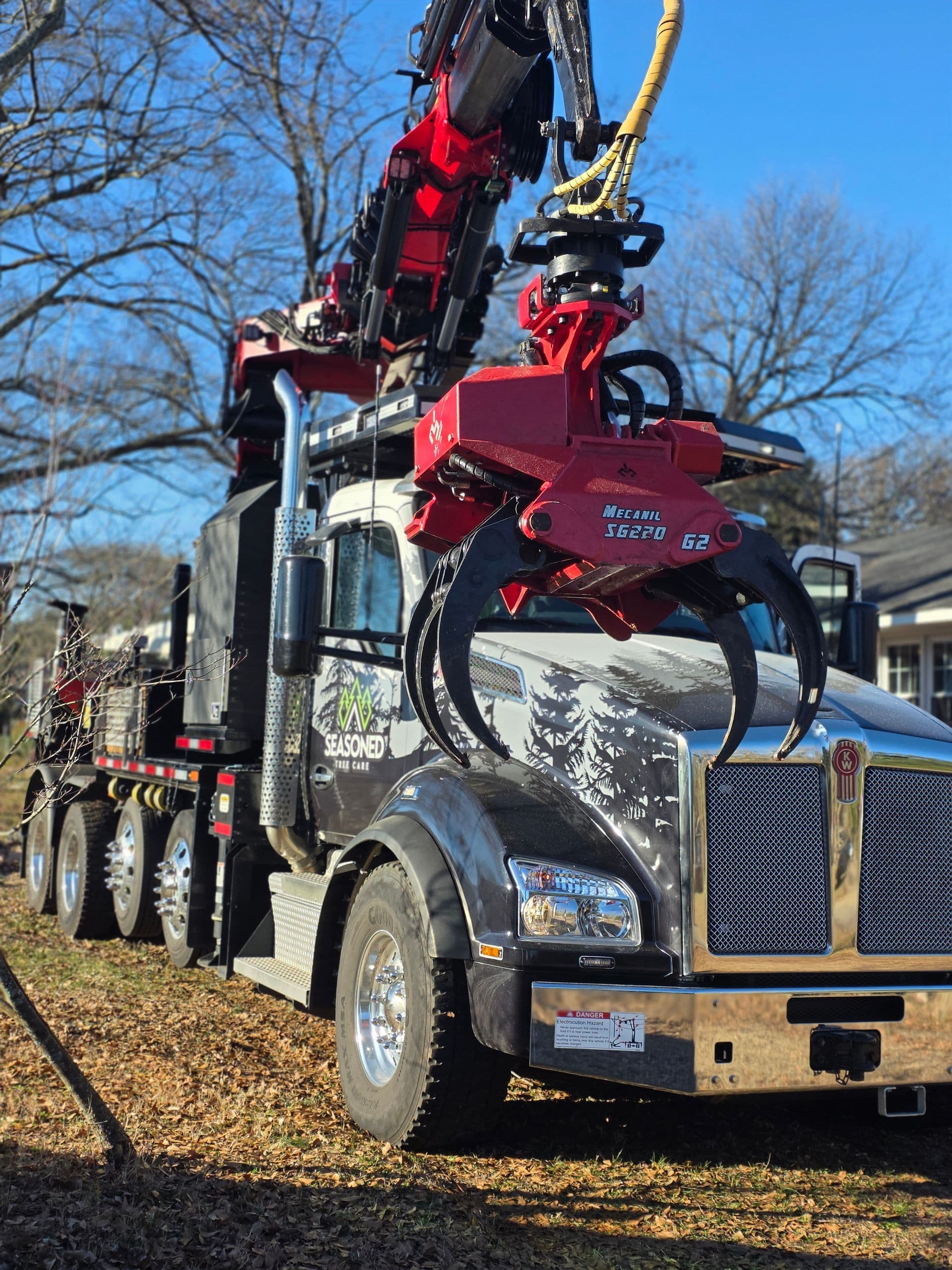
What leaves the site, and how, is part of the plan. Brush is chipped; logs are loaded out with grapple and dump trucks; stumps are ground below grade or excavated depending on what the foundation and grading need. You can keep chips on site for erosion control or mulch, or have everything removed for a clean, build-ready lot. The right choice depends on the project — it's worth deciding before clearing starts rather than dealing with piles later.
Section 06The right equipment for the Upstate
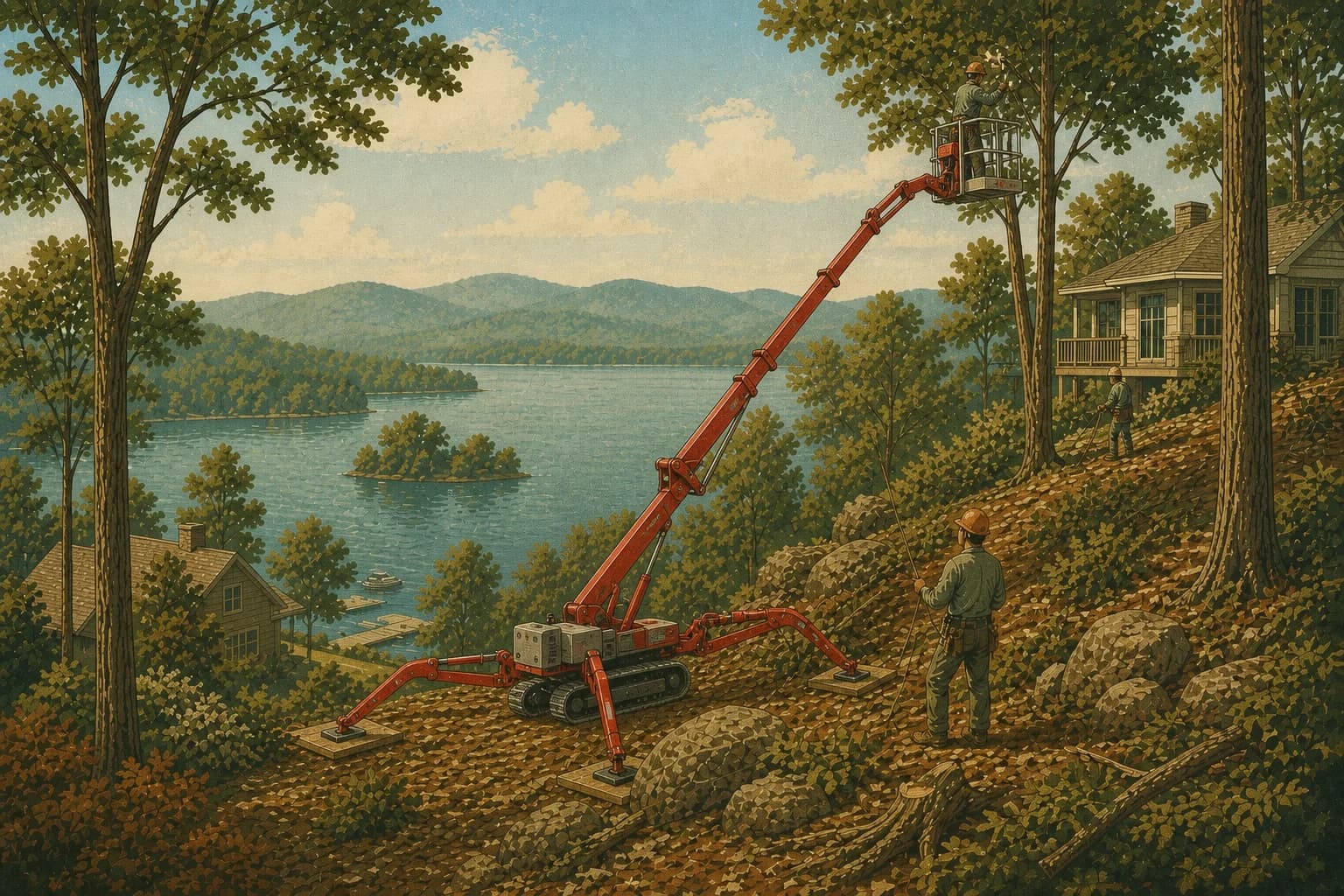
Clearing in Greenville County runs from a single wooded homesite to several acres, and from flat former pasture to steep foothill grade near the mountains. That range is why equipment matters: a crane for large legacy trees too close to keep, heavy chippers to process volume on site, and grapple and dump trucks to move the material out efficiently. Matching the gear to the site is what keeps a clearing job on schedule.
Planning a build in Greenville County? We'll walk the lot with you, flag the trees worth keeping, and give you a clear plan and estimate for clearing.
Get a land-clearing estimate →Good clearing is the quiet foundation of a good build: keep the trees worth keeping, protect their roots, respect the rules and the erosion risk, and plan the debris. Get that right and the rest of the project starts on solid ground. Call (864) 762-1253 to walk your Greenville County lot with us.
Quick answers
Frequently asked questions
It's more than knocking down trees. A typical clearing job means removing the trees and brush within the building footprint and access areas, grinding or pulling stumps, processing and hauling off the wood and debris, and leaving the ground in a state the grading crew can work with. On many sites it also means protecting the trees you're keeping and managing erosion — both of which are easier to plan before clearing than to fix after.
Usually only part. Selective clearing — opening the footprint, driveway, and work areas while preserving healthy mature trees elsewhere — protects property value, shade, and privacy, and is often what local landscaping or buffer requirements expect. Mature trees that survive construction are worth far more than replanted saplings. We help owners and builders decide which trees are keepers and which are in the way.
Often, yes. Land development is where tree ordinances most commonly apply — Greenville County and the incorporated cities may require tree protection, landscape buffers, and replacement plantings on development sites, even where a homeowner removing a single yard tree wouldn't need anything. Confirm requirements as part of your project's permitting before clearing begins. (See our guide to Greenville County tree permits.)
Brush and limbs run through chippers; logs are loaded and hauled off with grapple and dump trucks. Stumps are typically ground below grade or excavated depending on what the grading plan needs. We can leave usable chips on site if you want them for erosion control or mulch, or remove everything for a clean, build-ready lot.
Related services & areas
Sources & further reading
- Greenville County, SC (official site) — Land development, permitting, and site requirements in Greenville County
- International Society of Arboriculture / Trees Are Good — Protecting trees during construction and avoiding root-zone damage
- Clemson Cooperative Extension Home & Garden Information Center — Tree preservation and landscape guidance for South Carolina sites
Published by Seasoned Tree Care LLC. Serving Anderson, Greenville & communities across Upstate South Carolina. This article is general information, not a substitute for an on-site assessment.