Start here
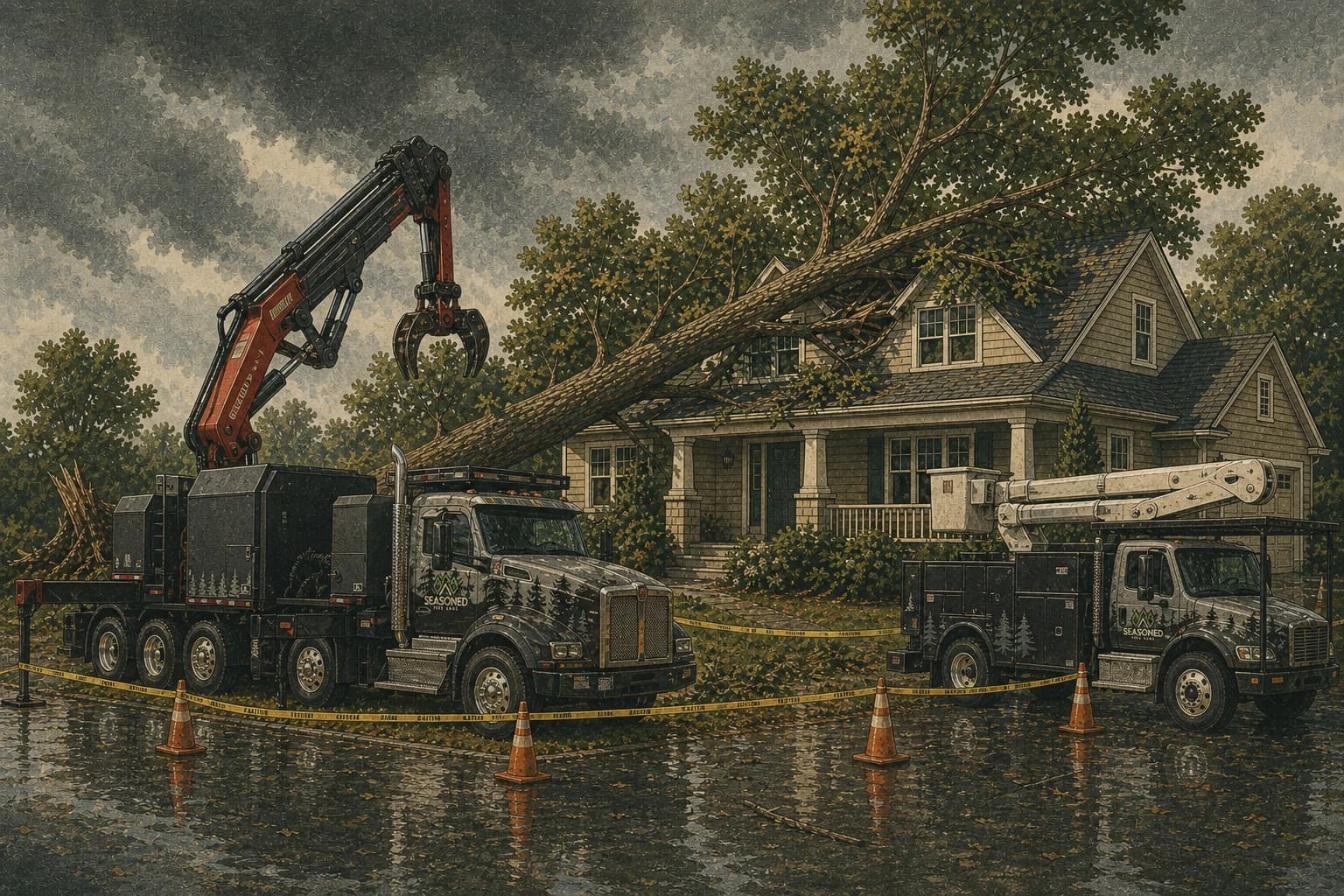
The Upstate gets its share of severe weather — summer thunderstorms barreling in off the mountains, the occasional ice event, and the remnants of tropical systems pushing up from the coast. When one of those drops a tree on your Greenville property, the first 48 hours matter more than people realize. They shape your safety, your insurance outcome, and how big the eventual repair bill gets. This is a calm, ordered plan for that window.
This guide focuses on the first decisions after storm damage. For advance maintenance, use storm-season tree preparation. For equipment and access planning after the immediate hazard is addressed, see crane tree removal explained.
Section 01Hours 0–2: Make sure everyone is safe
- Move everyone out of and away from any damaged area of the home.
- Stay far clear of downed or low-hanging power lines; keep children and pets back.
- If a tree is on the house, on a vehicle with someone inside, or blocking your only exit, call 911.
- Shut off utilities to the affected area only if you can do so safely.
- From a safe distance, get a sense of what's down, what's leaning, and what's still under tension.
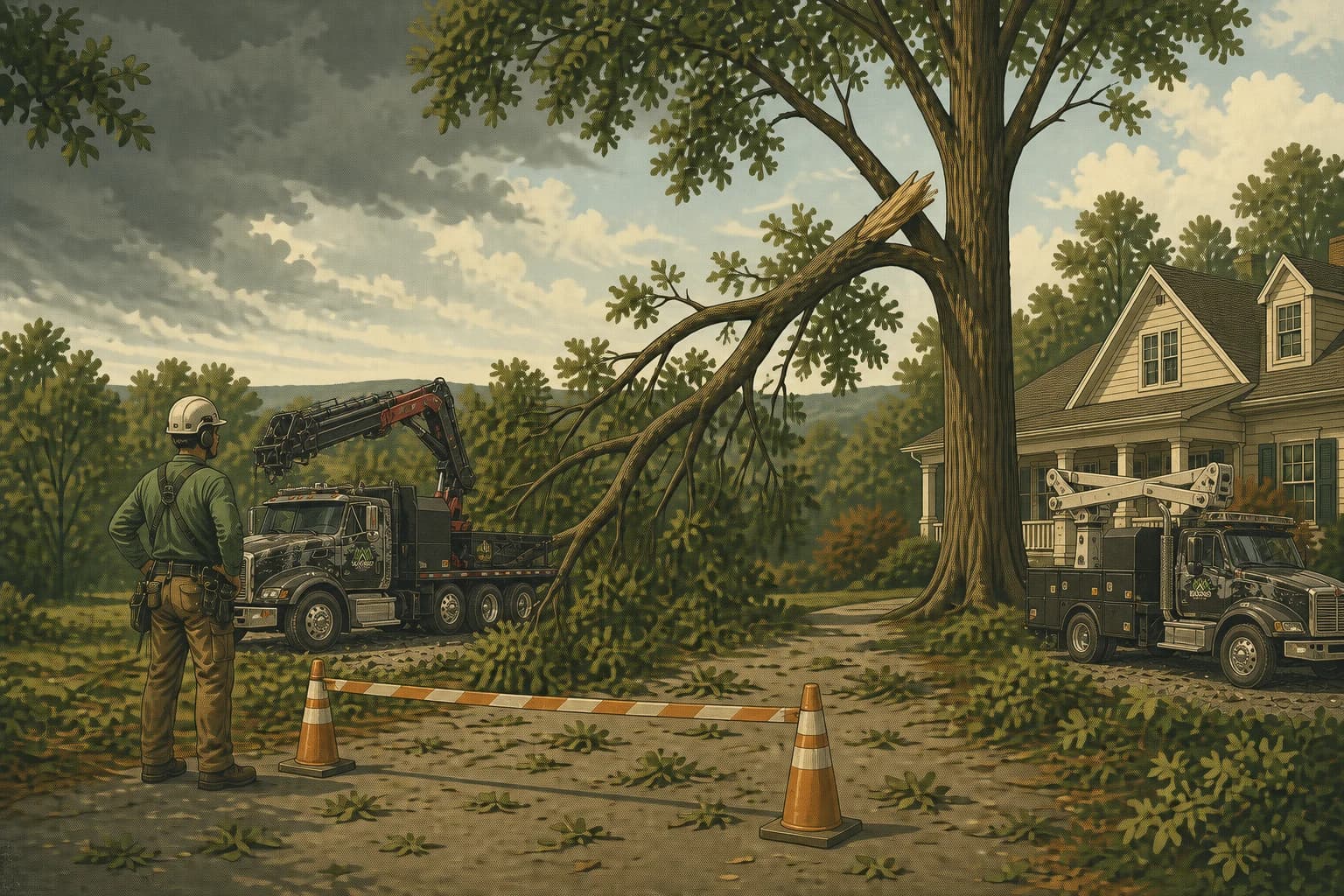
A tree that has fallen but is hung up in other trees or resting under tension is especially dangerous — it can shift without warning. That's not a DIY situation. The International Society of Arboriculture is clear that storm-damaged, hazardous trees should be handled by trained professionals with the right equipment.
Section 02Hours 2–12: Document everything for insurance
Before any cleanup begins, build your record. Insurance claims live and die on documentation, and the time to gather it is now — not after the debris is gone.
- Photograph and video the damage widely and up close: the tree, the structure, the interior, and any contents affected.
- Capture the date and time, and don't move things more than necessary to stay safe.
- Make temporary repairs that prevent further damage — tarping a roof opening, for example — and keep receipts.
- Write down what happened and when, while it's fresh.
- Contact your insurer to open a claim as soon as it's practical.
Most policies expect you to take reasonable steps to prevent additional damage, and emergency mitigation is frequently reimbursable. The Insurance Information Institute has helpful general guidance on documenting and filing claims, though your specific policy and adjuster have the final say.
Section 03Hours 2–48: Get a professional on it
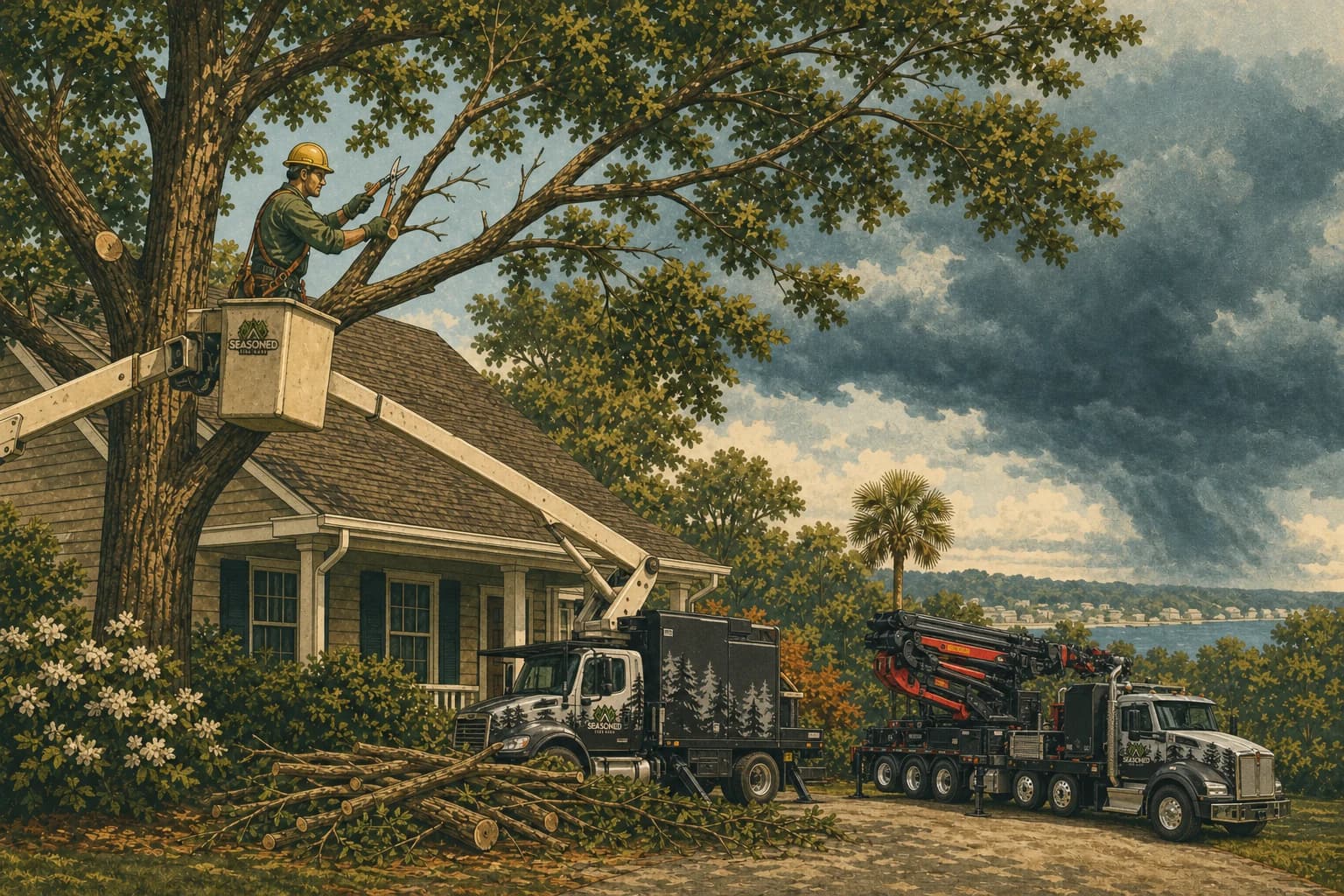
For anything beyond small, ground-level branches you can safely drag to the curb, this is the point to bring in an emergency tree crew. A professional can stabilize what's leaning or under tension, lift a tree off a structure without making the damage worse, and clear what's blocking access. On Greenville's tight, tree-dense lots — and especially when a tree is on a roof — that often means a crane lift rather than dropping wood into a space that isn't there.
When you call, describe the situation as precisely as you can: what's down, what it's on, whether lines are involved, and whether anyone is blocked in. After a widespread storm, that lets a crew triage correctly and reach the genuinely dangerous jobs first. We document storm and hazard work as we go, which keeps your insurance file clean.
Section 04What not to do
- Don't approach or cut a tree near power lines — ever.
- Don't climb on a fallen tree or onto a damaged roof.
- Don't run a chainsaw on a tree under tension or above shoulder height; storm-loaded wood snaps and kicks unpredictably.
- Don't haul everything off before you've documented it for insurance.
- Don't hire a door-knocking 'storm chaser' without checking that they're local, licensed, and genuinely insured.
Section 05When it's a true emergency vs. when it can wait
A tree on the house, a tree blocking your driveway or only exit, a limb hung up over a walkway, or anything tangled in lines is an emergency — call right away. A tree that's down in the back corner of the yard, well away from structures and lines, is usually safe to address on a normal schedule once you've documented it. When you're unsure whether a leaning or cracked tree is about to fail, treat it as hazardous and ask a professional rather than guessing.
Storm just hit and you've got a tree down or on your home in the Greenville area? We're available 24/7 — call and we'll triage it with you.
See our 24/7 emergency service →The storm is the hard part; the response doesn't have to be. Stay clear of lines, get your people safe, document before you clean up, and let an insured professional handle anything on a structure or under tension. Call (864) 762-1253 any time — we cover Greenville County and the Upstate around the clock.
Quick answers
Frequently asked questions
Get everyone out of the affected area and stay clear of any downed or sagging power lines — assume every line is live. If the structure is unsafe or lines are involved, call 911 and your utility. Once people are safe, call a professional tree service for emergency stabilization and removal, and start photographing the damage for your insurance. Don't climb on the tree or try to cut it off the house yourself.
Safety first, then whichever can act fastest for your situation. If a tree is on your home or blocking egress, get an emergency tree crew moving to make the scene safe — most policies expect you to take reasonable steps to prevent further damage. Document everything before and during, and contact your insurer as soon as practical. Keep all receipts; emergency mitigation is often reimbursable.
It often does when a tree damages an insured structure, though coverage and limits vary by policy — the Insurance Information Institute is a good general reference, but your specific policy and adjuster govern. Thorough documentation (photos, dates, and an itemized scope from your tree service) helps the claim go smoothly. A tree that falls without hitting a structure may be handled differently, so check your policy.
We offer 24/7 emergency response across Greenville County and the Upstate. After a widespread storm, the safest, most dangerous situations — trees on homes, blocked exits, trees tangled in lines — are prioritized first. Call (864) 762-1253 and describe the situation so we can triage it correctly.
Related services & areas
Sources & further reading
- International Society of Arboriculture / Trees Are Good — Guidance on tree risk and when storm-damaged trees are hazardous
- Insurance Information Institute — Documenting damage and filing home insurance claims after a disaster
- Clemson Cooperative Extension Home & Garden Information Center — Storm recovery and tree care guidance for South Carolina landscapes
Published by Seasoned Tree Care LLC. Serving Anderson, Greenville & communities across Upstate South Carolina. This article is general information, not a substitute for an on-site assessment.