Start here
Whether a Greenville tree removal needs approval depends on the parcel and the proposed work. A Greenville mailing address does not establish that a property is inside City of Greenville limits, and a residential yard, a street-side tree and a development site can raise different questions. Start with jurisdiction, then confirm the requirements for the specific tree before scheduling.
Section 01The general rule for private residential property
First establish whether the parcel is in an incorporated city or unincorporated Greenville County. Then explain whether the work is a single-tree removal, part of construction, within a required landscape area or close to a right-of-way. Ask the relevant office for the requirements that apply to that parcel and scope. Do not use a general online answer as evidence of an exemption.
Section 02When a permit or approval may actually apply
You're inside a city's limits
Incorporated municipalities can regulate trees in ways the county does not. The City of Greenville and surrounding cities like Greer, Simpsonville, and Mauldin may have ordinances covering protected or heritage trees, street trees, landscape buffers, and tree protection on development sites. If your address is inside city limits, those local rules are the ones that matter — check that specific city.
The tree is in a right-of-way or easement
Trees in the public right-of-way (commonly the strip between sidewalk and street) are typically the municipality's to control, not the adjacent homeowner's. Trees inside a utility easement may be subject to the utility's rules. Removing or even heavily pruning these usually requires getting the right party involved first.
The work is tied to development or construction
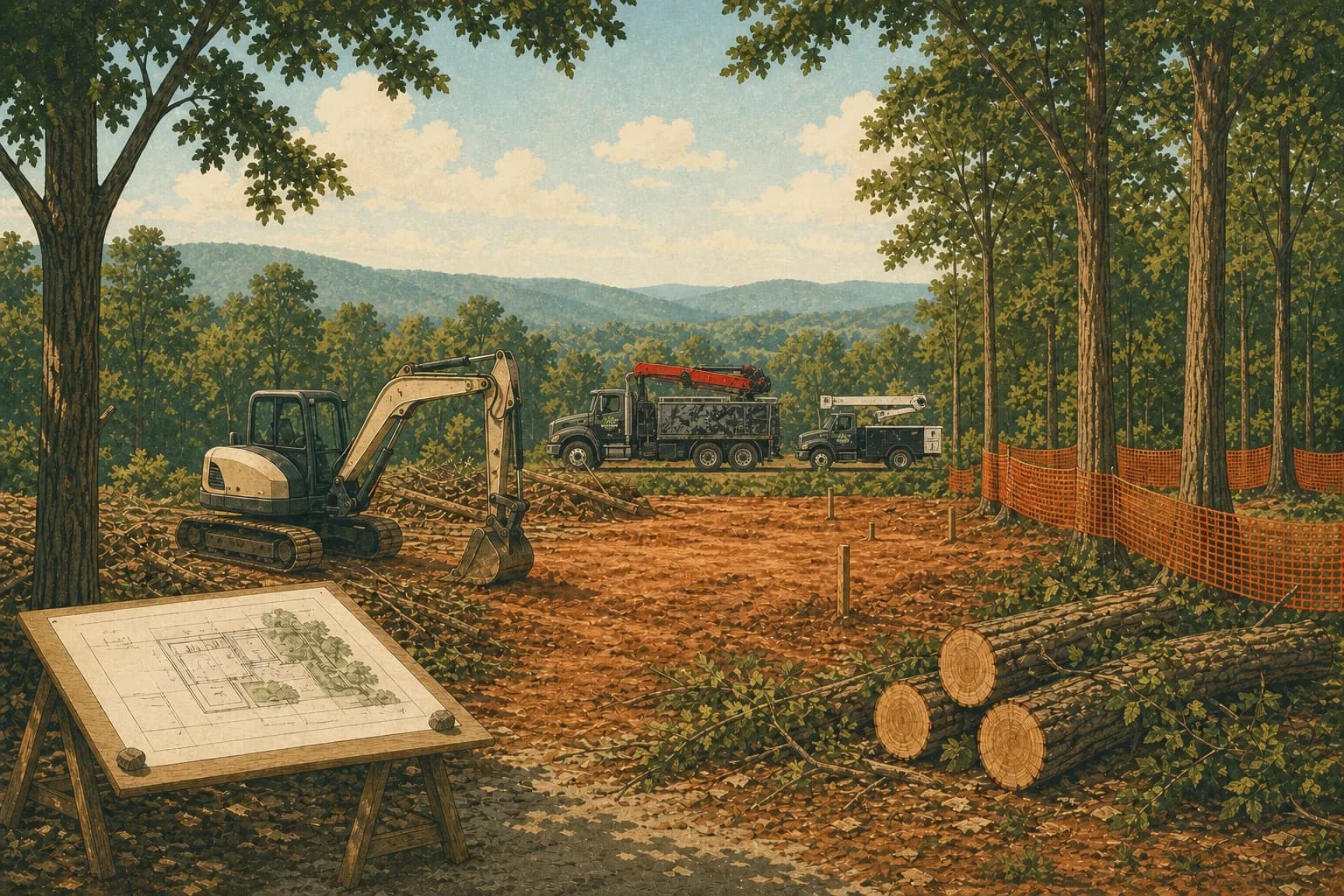
Clearing for new construction, subdivisions, or commercial sites is a different world from residential removal. Land development commonly triggers tree-protection, buffer, and replacement requirements at the city or county level. If your removal is part of a build, confirm the requirements as part of the project's permitting.
Your HOA has covenants
This is the rule homeowners most often forget. Many Greenville-area subdivisions — especially in Simpsonville, Five Forks, and Greer — have HOAs with covenants on tree removal, replacement, and species. HOA approval is separate from, and in addition to, any government rule. Check your covenants and get written approval before work starts.
Section 03Protected and heritage trees
Some jurisdictions designate certain large, old, or significant trees as protected or 'heritage' trees, with extra steps required before removal even on private property. Whether and how this applies depends on your specific municipality. If you have an unusually large or historic tree, it's worth a quick check rather than an assumption.
Section 04Hazardous trees and storm damage
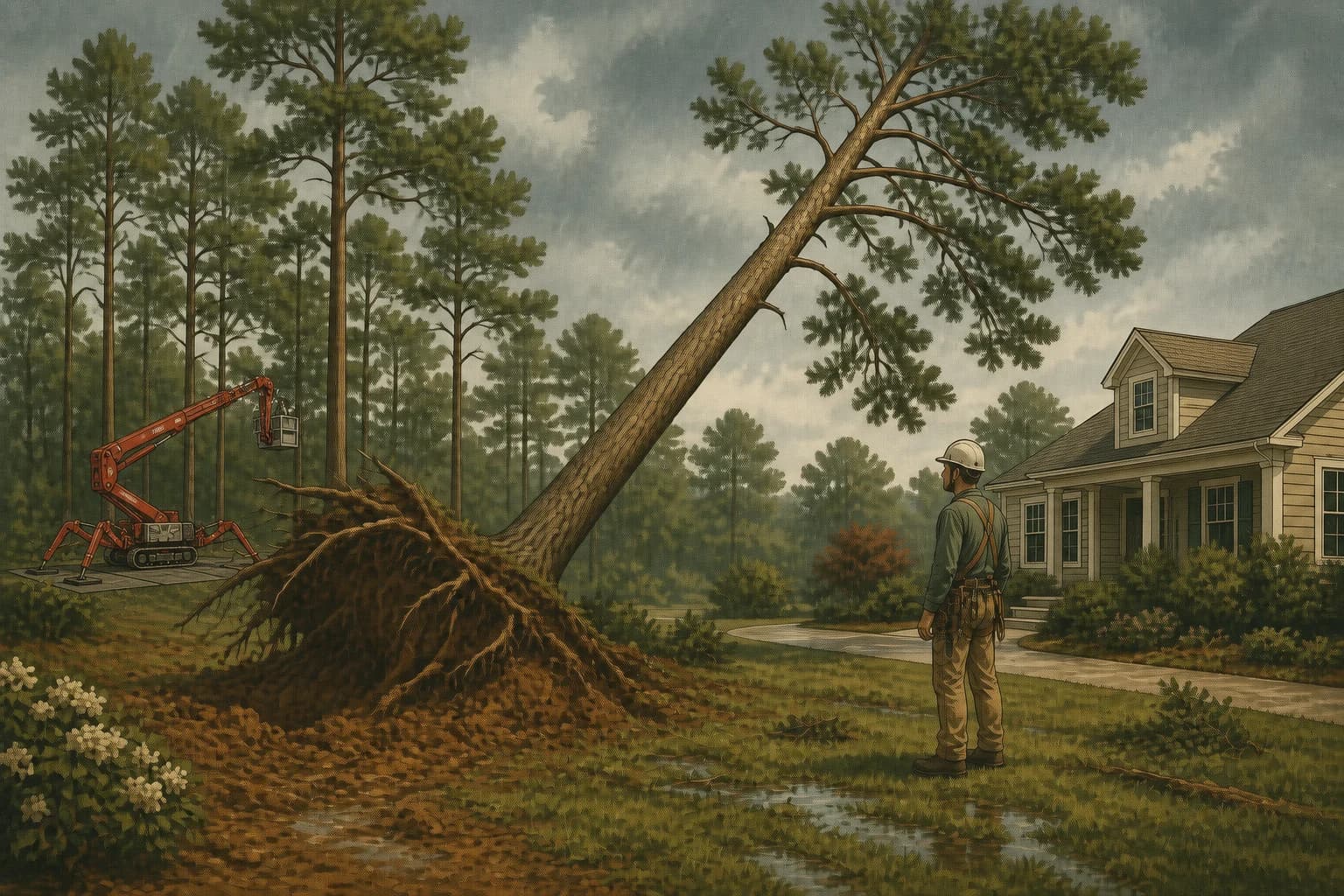
If a tree presents immediate danger, keep people away and contact the appropriate emergency service or utility where needed. From a safe location, preserve photographs and observations. Ask the jurisdiction whether an emergency process applies and what documentation is required; do not assume storm damage waives every approval.
Section 05A simple before-you-cut checklist
- Is the tree on your private property, or in a right-of-way/easement? (If the latter, contact the city or utility.)
- Are you inside a city's limits? (If so, check that city's tree ordinance.)
- Is the removal part of construction or development? (If so, it's part of project permitting.)
- Do you have an HOA? (Check covenants and get written approval.)
- Is it an unusually large, old, or significant tree? (Ask whether it's protected.)
- Still unsure? Call the City of Greenville or Greenville County — or ask us to point you to the right office.
Keep the jurisdiction’s written response, any required approval and the agreed tree-work scope together. Before the crew is scheduled, resolve any tree ownership, access or HOA questions. Our Greenville removal-cost guide can then help you compare estimates for the approved work.
Section 06Official starting points for your parcel
Use the City of Greenville Landscaping & Trees page for the city’s tree and landscape information. For unincorporated county parcels or development questions, the Greenville County Permitting contacts page lists the relevant offices. Both direct links are below. If the property is in Greer, Mauldin, Simpsonville or another municipality, contact that municipality rather than assuming City of Greenville rules apply.
- Provide the parcel address or parcel identifier to the relevant office.
- Describe each tree, its location and the reason for removal; identify any construction plan, required landscaping or right-of-way concern.
- Ask whether approval, documentation or replacement planting is required and which current provision applies.
- Ask about the procedure for a documented urgent hazard if applicable.
- Keep the response or permit, check its conditions and confirm the work scope matches it.
Have a tree you need removed in Greenville County? We'll assess it, help you confirm any rules that apply, and give you a free written estimate.
Get a free estimate →Quick answers
Frequently asked questions
There is no reliable blanket answer for every Greenville County address. Confirm whether the parcel is inside a municipality, then ask the relevant office about the specific removal and any development, landscaping, easement or right-of-way conditions. HOA approval is a separate check.
Often, yes. Incorporated municipalities — the City of Greenville, Greer, Simpsonville, Mauldin, and others — can have their own tree and landscaping ordinances that don't apply in unincorporated county areas. These commonly address street trees, trees on commercial or development sites, landscape buffers, and tree protection during construction. If you're inside city limits, check that city's ordinances specifically.
Trees in the public right-of-way — often the strip between the sidewalk and the curb — typically belong to the municipality or are subject to its control, not the adjacent homeowner. Removing or pruning them usually requires the city's involvement. The same caution applies to trees within a utility easement, which the utility may control. When in doubt, treat any tree near the street or lines as 'check first.'
Homeowners associations frequently have their own covenants governing tree removal, replacement, and even which species you can plant — entirely separate from any city or county rule. Many of Greenville's subdivisions in areas like Simpsonville, Five Forks, and Greer have active HOAs. Always check your covenants and get any required written approval before work begins.
Ask the relevant jurisdiction whether an emergency process applies and what documentation it requires. Photograph the condition only from a safe location. Keep people away from immediate hazards and contact emergency services or the utility when needed.
Related services & areas
Sources & further reading
- City of Greenville, SC — City tree and landscaping information
- Greenville County, SC — Permitting office contacts, including land development
Published by Seasoned Tree Care LLC. Serving Anderson, Greenville & communities across Upstate South Carolina. This article is general information, not a substitute for an on-site assessment.