Start here
Spring and summer storms move across Upstate South Carolina quickly, and the trees around your home take the brunt of the wind, lightning, and saturated soil. Homeowners in Anderson, Greenville, and the surrounding Upstate can lower their risk substantially with a little preparation before the season turns. This guide walks through a pre-storm inspection, which tasks are safe to handle yourself, how to document damage for insurance, and what to do after a tree comes down.
Section 01Pre-Storm Inspection Checklist
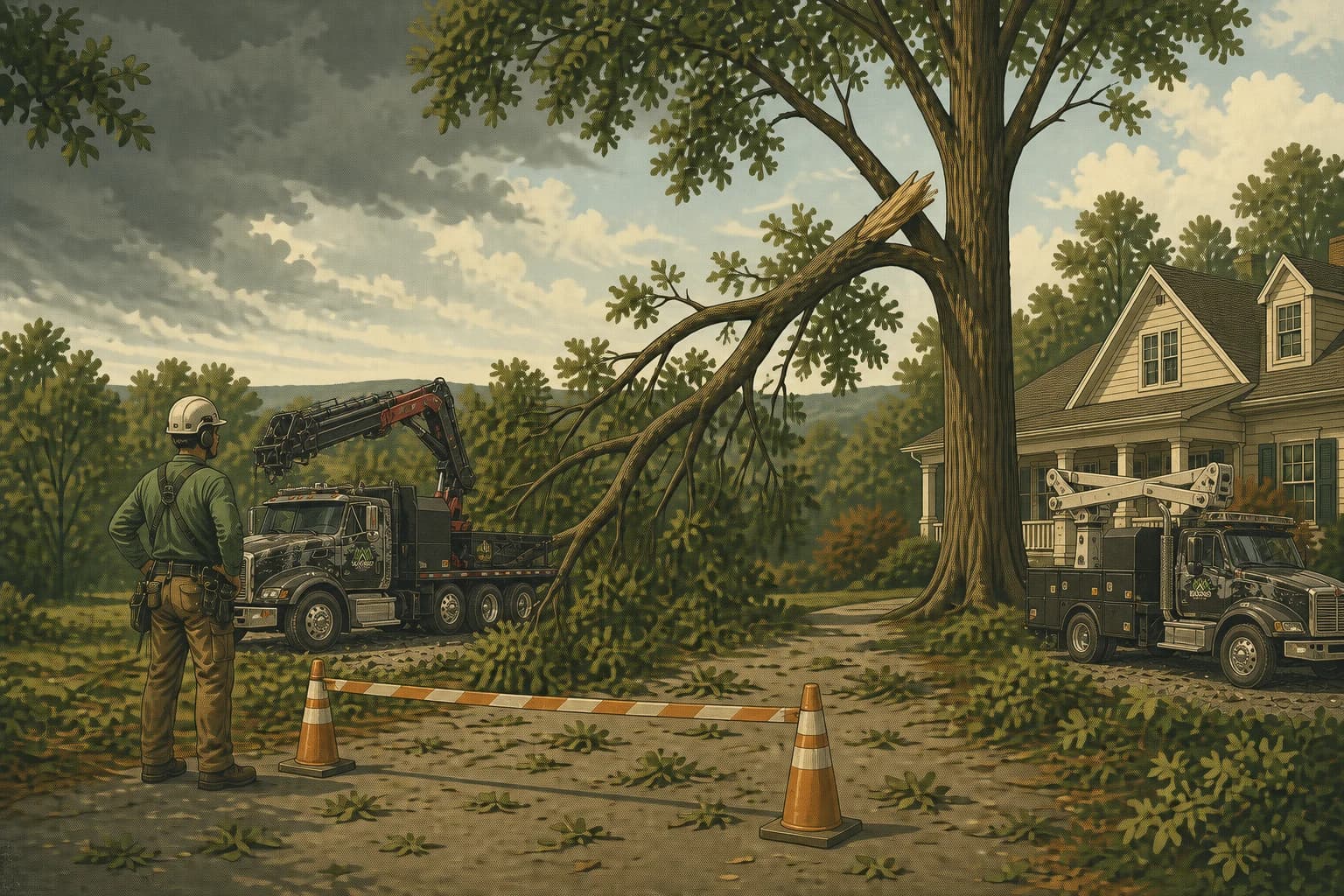
Start with a slow walk around every tree on your property, ideally on a calm, clear day. According to Clemson Cooperative Extension HGIC, removing dead and weak wood before storm season is one of the most effective ways to reduce failure during high wind. Look for the following warning signs:
- Deadwood — bare branches with no leaves in season, brittle limbs, or peeling bark that signals a dead or dying section.
- Cracks — vertical splits in the trunk or splits where major limbs meet, which can widen suddenly under load.
- Root-zone changes or heaving — soil lifting, cracking, or mounding on one side of the trunk, often the first visible sign a tree is starting to uproot.
- A new or worsening lean — especially a lean that has appeared recently rather than one the tree grew with.
- Cavities and decay — open hollows, soft or crumbling wood, or fungal conks growing on the trunk or roots.
- Limbs overhanging roofs, driveways, and play areas — anything positioned to cause damage or injury if it breaks.
- Weak forks and included bark — tight V-shaped unions where bark is pinched between two stems instead of solid wood joining them; these are common failure points.
Section 02Safe Homeowner Tasks vs. Tasks to Leave to a Crew
Plenty of storm prep is well within reach for a careful homeowner. Other work involves height, heavy wood under tension, or proximity to hazards and should be handled by a trained, insured crew. The table below sorts common tasks.
Inspecting trees from the ground and noting warning signs
- Leave to a professional crew
- Any cutting near or above energized power lines
Raking and clearing small loose debris from the yard
- Leave to a professional crew
- Climbing or working from a ladder with a chainsaw or pole saw
Pruning small, low branches you can reach with both feet on the ground
- Leave to a professional crew
- Removing large limbs over a roof, vehicle, or other structure
Securing patio furniture and loose items before a storm
- Leave to a professional crew
- Cutting limbs or trunks that are bent, pinned, or under tension
Photographing conditions and damage for your records
- Leave to a professional crew
- Felling or sectioning a leaning, cracked, or partially uprooted tree
| Safe to do yourself | Leave to a professional crew |
|---|---|
| Inspecting trees from the ground and noting warning signs | Any cutting near or above energized power lines |
| Raking and clearing small loose debris from the yard | Climbing or working from a ladder with a chainsaw or pole saw |
| Pruning small, low branches you can reach with both feet on the ground | Removing large limbs over a roof, vehicle, or other structure |
| Securing patio furniture and loose items before a storm | Cutting limbs or trunks that are bent, pinned, or under tension |
| Photographing conditions and damage for your records | Felling or sectioning a leaning, cracked, or partially uprooted tree |
If a job requires leaving the ground, running a saw overhead, or dealing with wood that is bound up under tension, treat it as a professional task. ISA and the Trees Are Good program note that storm-damaged trees often hold stored energy in bent and pinned limbs that can release violently when cut. Our team handles that work with the right equipment and proper rigging.
Section 03Documenting Damage for Insurance
If a tree damages your home, vehicle, or property, good documentation makes the claims process smoother. The following is general guidance, not legal or insurance advice — confirm the specifics with your own insurer.
- Photograph the scene before anything is moved: wide shots that show the whole tree and the property, then closer shots of damage to roofs, walls, vehicles, and fences.
- Take a second round of photos as cleanup progresses, so the before and after are clearly linked.
- Keep receipts, written estimates, and invoices for any emergency work, tarping, or removal.
- Note the date and time of the storm and the damage.
Seasoned Tree Care helps with insurance documentation on emergency calls, recording the damage and the work performed so you have a clear record to give your insurer.
Section 04After the Storm: Safety First
Once a storm passes, the property can still be dangerous. The South Carolina Forestry Commission advises treating downed and damaged trees with caution during recovery. Before you start any cleanup:
- Assume any downed or sagging line is live — keep clear and report it to your utility; call 911 if there is immediate danger.
- Look up before walking under or near trees; hanging limbs, sometimes called widow-makers, can fall without warning.
- Watch for trees that are leaning, cracked, or partially uprooted and stay out from under them.
- Keep children and pets indoors and away from the work area.
- Do not run a chainsaw alone, when tired, or on wood that is bent or pinned under tension.
- Call a professional crew for anything beyond small, ground-level debris.
Section 05Our 24/7 Emergency Response
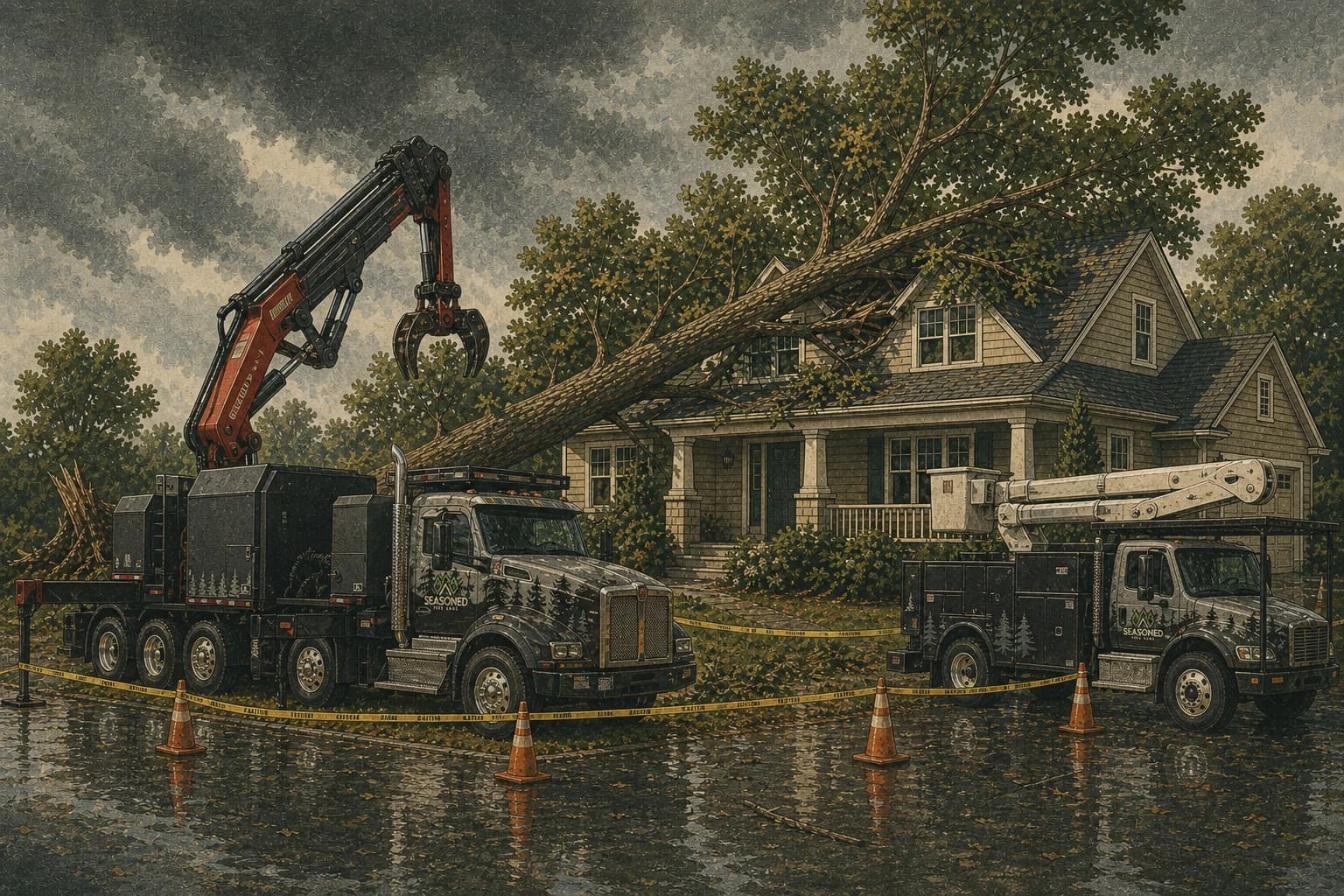
When a tree comes down on your home or blocks access, Seasoned Tree Care responds 24/7 across the Upstate. Our process is straightforward:
- Secure the scene — we assess hazards, keep people clear of unstable wood and any utility involvement, and stabilize what needs stabilizing.
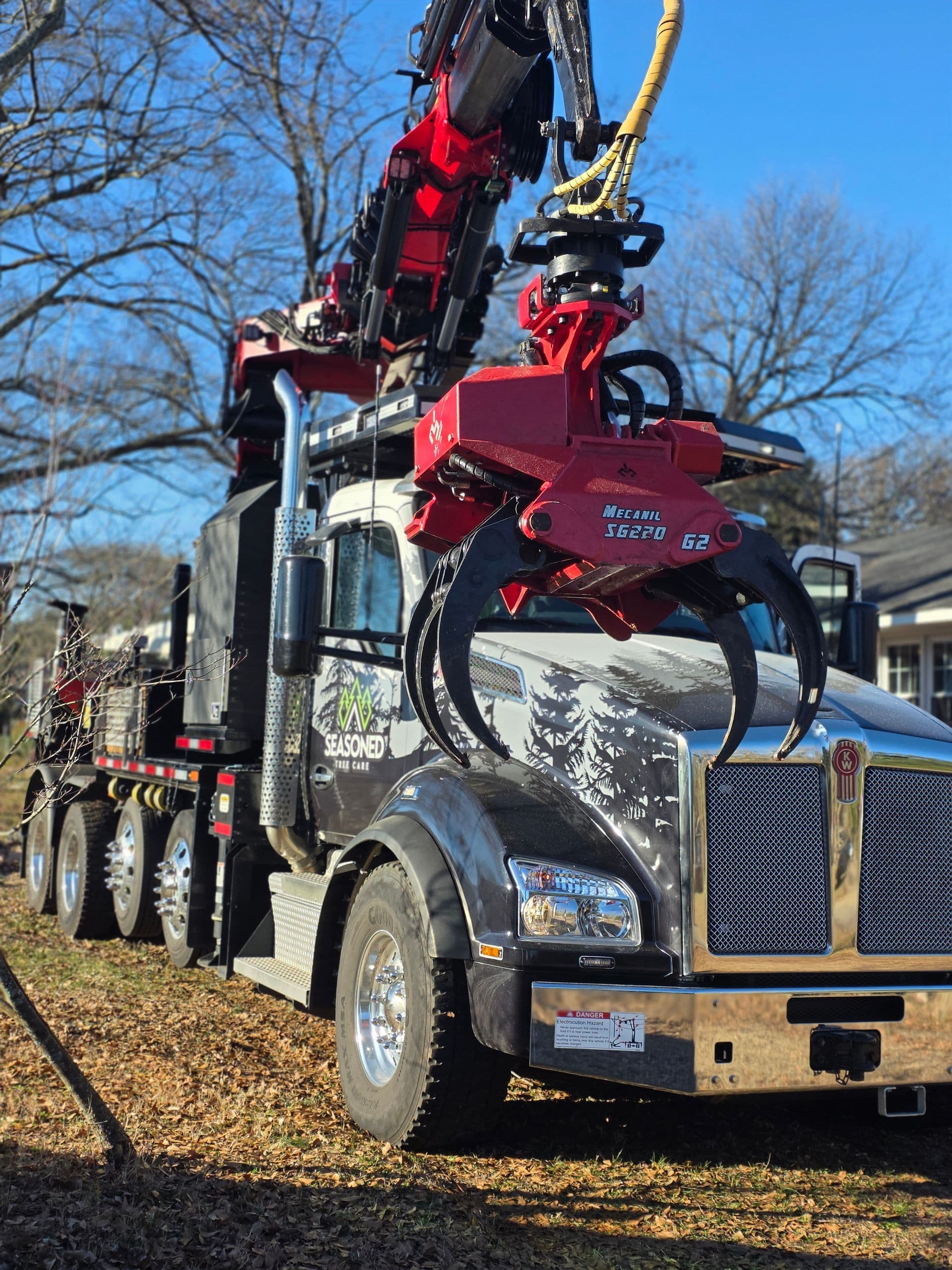
- Remove the tree — using our crane and grapple truck for heavy storm cleanup, we section and lift trees off structures and clear access safely.
- Document the damage — we record the damage and the work performed to support your insurance claim.
We carry $2M in liability insurance plus workers' compensation, so the work on your property is properly covered.
A tree down on your home or driveway cannot wait. Our crew responds around the clock across Anderson, Greenville, and the Upstate.
Emergency Tree Service →Want to get ahead of the next storm? Scheduling tree trimming to remove deadwood and weak limbs, or tree removal for a hazardous tree, before the season turns is far easier than dealing with the aftermath. And if a storm has already hit, our emergency tree service is available 24/7. Call (864) 762-1253 to talk through what your property needs.
Quick answers
Frequently asked questions
Walk your property before each storm season and again after any major wind, ice, or heavy-rain event. Look for new leans, fresh cracks, broken or hanging limbs, and soil heaving around the root zone. If you spot something you are not sure about, have it looked at before the next system moves through rather than after.
No. Never approach, touch, or attempt to clear any tree or limb that is touching or near an energized power line. Keep yourself, ladders, pole saws, and other people well clear, and report it to your electric utility. If a line is down or there is any immediate danger, call 911.
Document the scene before anything is moved: wide shots showing the tree and the property, then closer shots of the damage to structures, vehicles, or fences. Photograph again as cleanup progresses, and keep receipts and written estimates. This is general guidance, not legal or insurance advice, so confirm specifics with your insurer.
We respond around the clock to secure the scene, stabilize and remove the tree using our crane and grapple truck when needed, clear access, and document the damage so you have a record for your insurer. We carry $2M liability insurance plus workers' compensation.
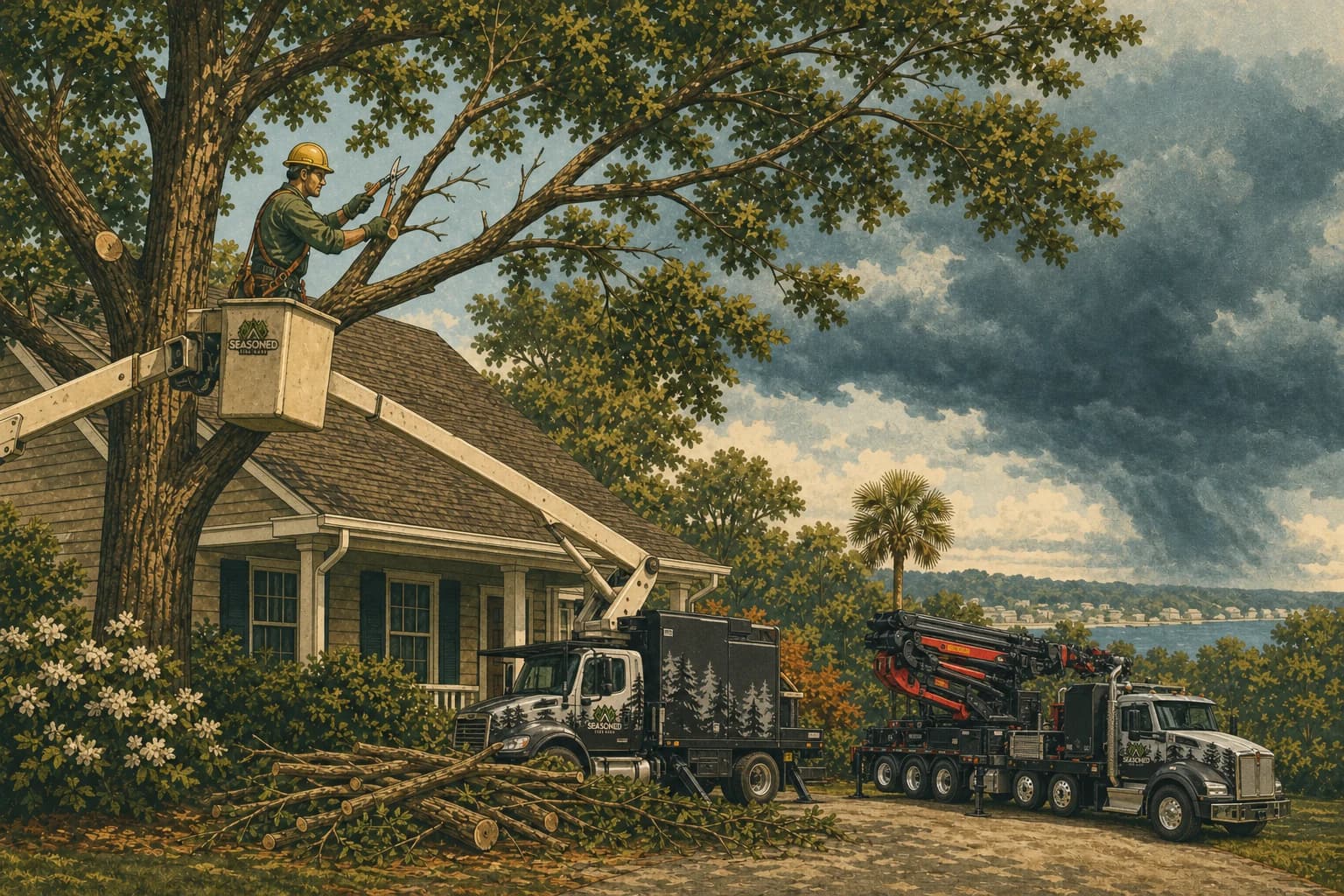
Schedule structural pruning and deadwood removal well ahead of the active storm months so trees have settled and crews are not stretched thin during an event. Removing weak, dead, or overextended limbs ahead of time reduces what can break loose in high wind.
Related services & areas
Sources & further reading
- Clemson Cooperative Extension HGIC — Pruning and storm preparation for trees
- South Carolina Forestry Commission — Storm response and tree recovery guidance
- Occupational Safety and Health Administration — Tree work and electrical hazard safety
- ISA / Trees Are Good — Storms and your trees
Published by Seasoned Tree Care LLC. Serving Anderson, Greenville & communities across Upstate South Carolina. This article is general information, not a substitute for an on-site assessment.