Start here
The lots around Paris Mountain — up through Travelers Rest and across the wooded northeast side of Taylors — are some of the prettiest in the Upstate, and some of the trickiest to work. The same slopes that give those homes their views and their tall, mature trees also make tree removal genuinely harder. When a tree on a foothill lot has to come down, the grade is usually the real challenge, not the tree. Here's how these jobs actually work.
Section 01Why the slope is the hard part
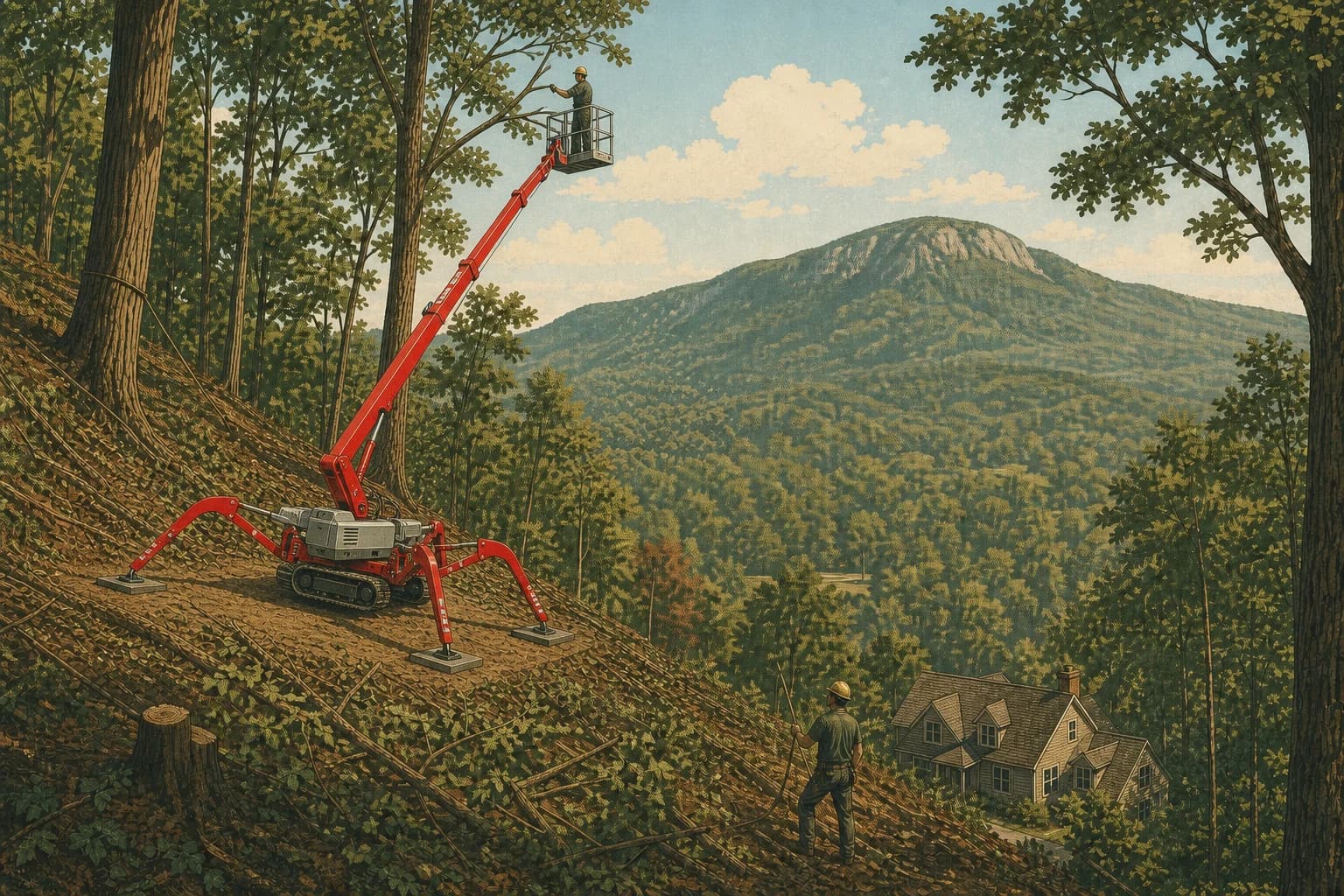
On a flat lot, a crew can drive equipment to the tree, set up on level ground, and fell or lower it into open space. A hillside takes all three of those away:
- Access — equipment can't always reach the tree, and what does reach it has to work on a grade.
- Footing — the crew is cutting and rigging on unstable, sloped ground.
- No drop zone — there's rarely a safe flat area to fell into.
- Debris movement — wood and brush have to go uphill or be lifted, not dragged across level ground.
Section 02Why a crane earns its keep on a hillside
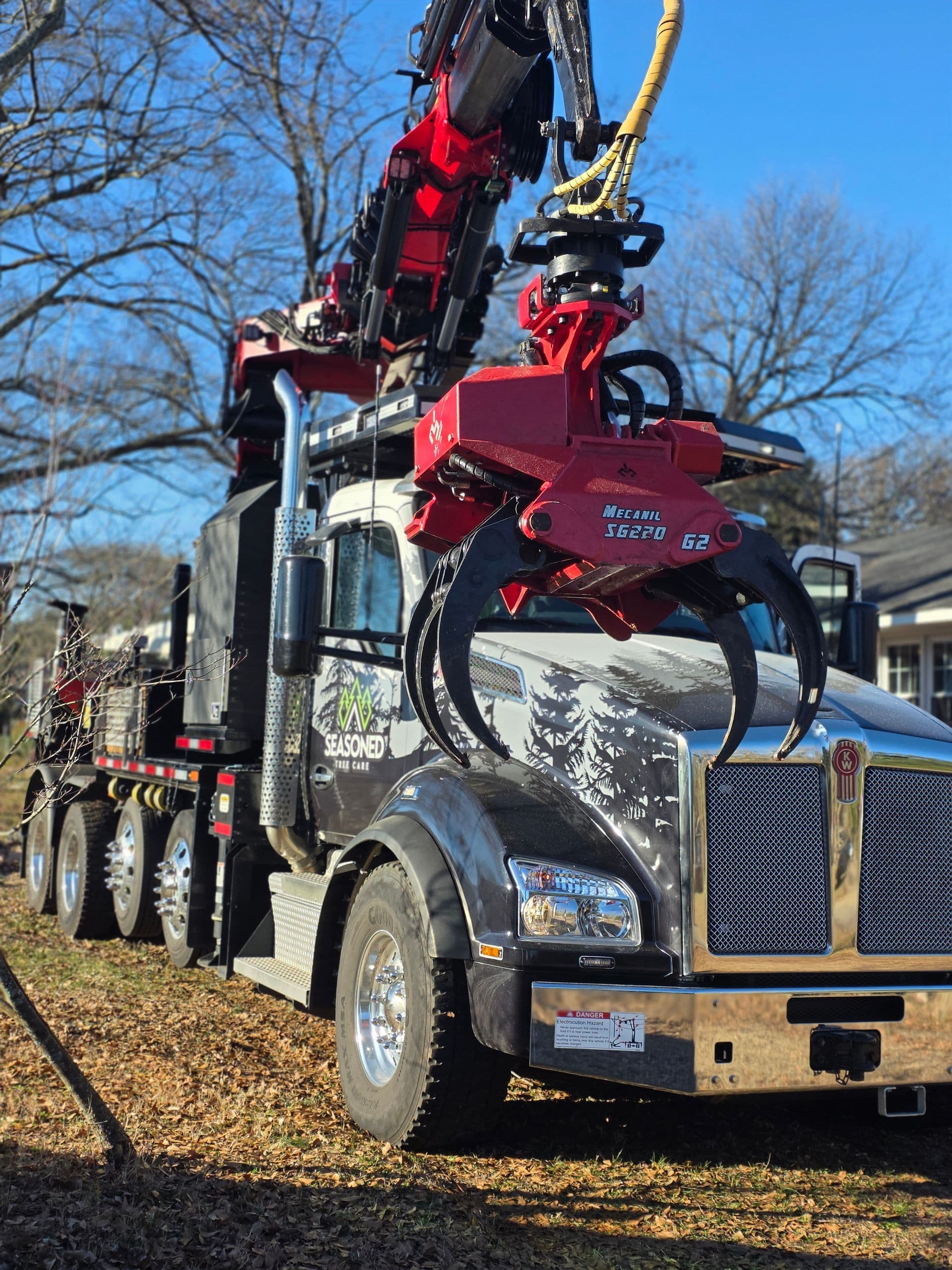
The foothill terrain is exactly where crane removal shines. When a big hardwood stands below the house on ground too steep to set equipment beneath it, we can position the Palfinger crane on the firm ground above and lift each cut section straight up and away — over the slope, out of the danger zone, to a staging area. That replaces a slow, risky hand-rigging operation on unstable footing with a controlled series of lifts. The ISA's emphasis on proper equipment and technique for hazardous trees is never more true than on a slope.
Section 03Slope stability and erosion
Trees do real work on a hillside: their roots help hold the soil. Removing them, and the disturbance of the work itself, can leave a slope more prone to erosion if it's not handled thoughtfully. We keep ground disturbance to a minimum, work off mats, and often grind stumps rather than excavate them where leaving the root mass helps hold the bank. If you're clearing several trees on a grade, it's worth planning ahead for ground cover or replanting so the slope stays anchored — Clemson Extension has useful guidance on vegetation for slope stability.
Section 04Storm exposure in the foothills
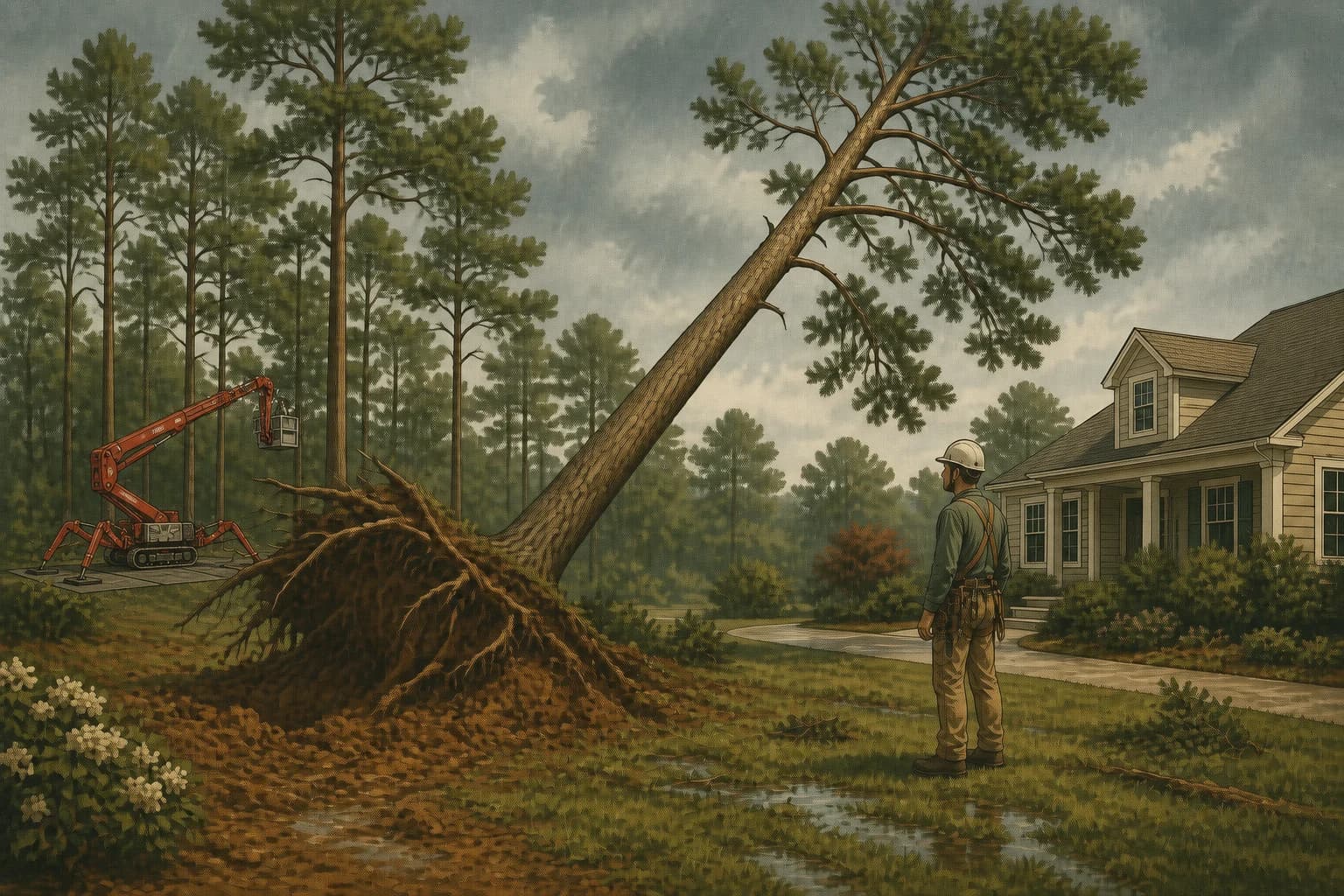
Wind funnels and accelerates around Paris Mountain and the Blue Ridge front, and tall, slope-grown trees catch a lot of it. That makes foothill lots in Travelers Rest and Taylors prone to storm damage — leaning trees, broken tops, and uprooting on saturated slopes. If you've got a big tree leaning toward the house on a grade, it's better assessed before storm season than cleaned up after, and we offer 24/7 emergency response when one does come down.
Section 05Protecting the property
A hillside lot is easy to scar and hard to repair, so protection is part of the plan: turf mats to stabilize and spread equipment weight, staging and drag paths mapped around the grade before any cutting, and the crane doing the heavy lifting so wood isn't dragged across the slope. The point is to take the tree out cleanly and leave the hillside, the lawn, and the trees you're keeping intact.
Have a tree on a steep lot in Travelers Rest, Taylors, or anywhere around Paris Mountain? We'll assess the access and slope and recommend the safest approach.
Request a steep-lot estimate →Steep-lot removals reward planning and the right equipment and punish shortcuts. If you've got a hillside tree near the mountain that needs to come down — or one leaning the wrong way before the next storm — call (864) 762-1253 and we'll figure out the safest way to handle it.
Quick answers
Frequently asked questions
Slope changes everything. Equipment can't simply drive up to the tree, footing for the crew is unstable, and there's no safe flat 'drop zone' to fell into — a tree dropped downhill builds dangerous momentum and can roll. Wood and debris also have to travel uphill or be lifted out rather than dragged across level ground. All of that means more rigging, more planning, and often a crane to lift sections up and out instead of dropping them.
Often, yes. When a tree stands below the house or driveway on a grade too steep to set equipment beneath it, a crane positioned on the firm ground above can lift sections straight up and away — far safer than trying to rig everything by hand on a slope. Not every steep-lot job needs one, but the combination of grade, big foothill hardwoods, and tight access makes crane removal the right tool more often here than on flat lots.
It can if it's done carelessly, because tree roots help hold slope soil in place and the work itself disturbs ground. We minimize this by working off mats, limiting how much we disturb, and grinding stumps rather than excavating them where that's better for stability. If you're removing several trees on a grade, it's worth planning for ground cover or replanting so the slope stays anchored.
We use turf protection mats to stabilize and spread equipment weight on slopes and limit rutting, plan staging and drag paths around the grade before any cutting, and use the crane to keep heavy wood from traveling across the lot. The goal is to remove the tree without scarring the hillside, the lawn, or the trees you're keeping.
Related services & areas
Sources & further reading
- International Society of Arboriculture / Trees Are Good — Tree risk, safe work practices, and hiring qualified professionals
- Clemson Cooperative Extension Home & Garden Information Center — Managing trees and vegetation on slopes for soil stability in South Carolina
- South Carolina Forestry Commission — Upstate forests and the hardwood and pine species found in the foothills
Published by Seasoned Tree Care LLC. Serving Anderson, Greenville & communities across Upstate South Carolina. This article is general information, not a substitute for an on-site assessment.