Start here
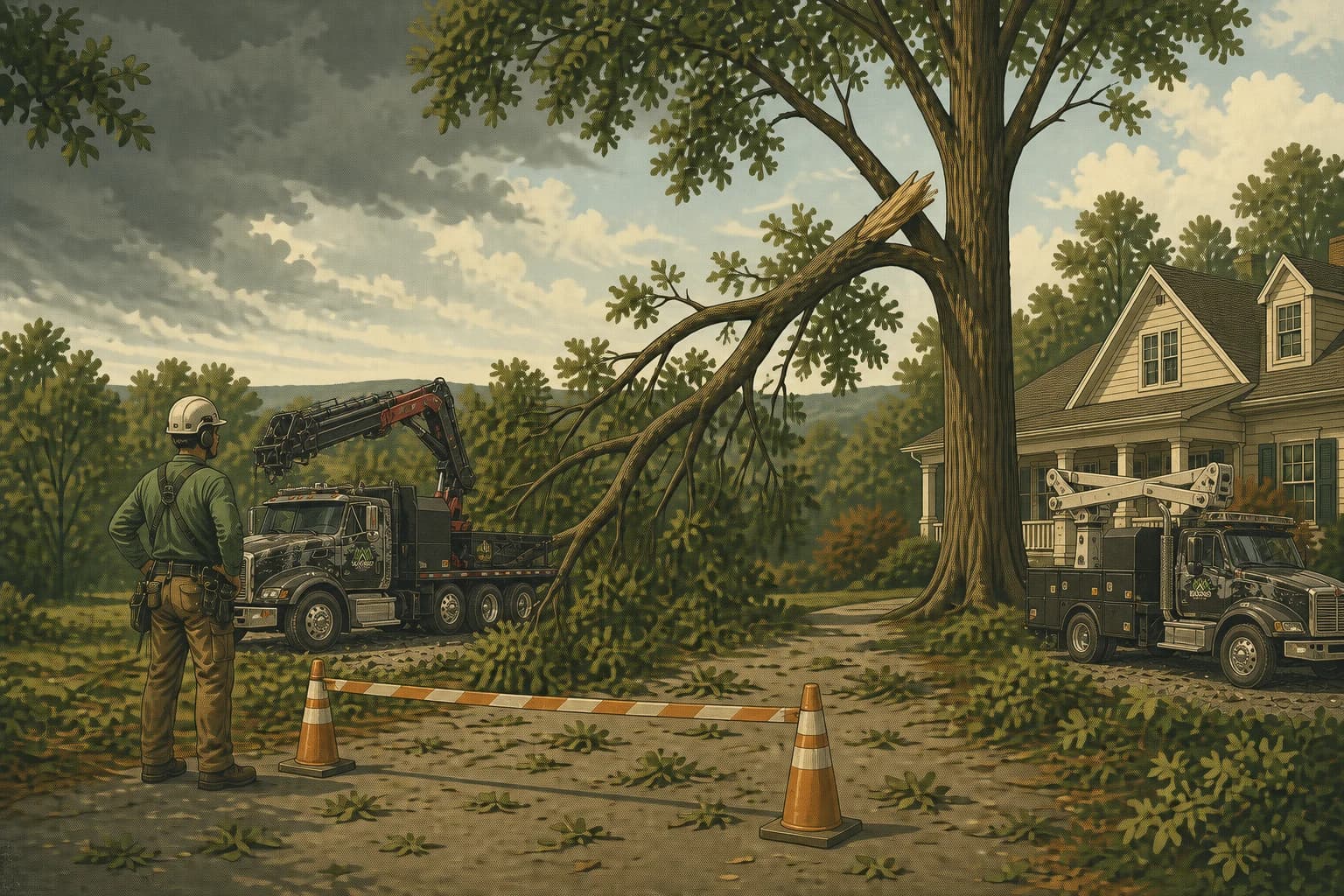
A tree on your house is one of the few tree problems that is a genuine emergency, and the first few minutes matter more than the roof does. It's natural to fixate on the damage — the shingles, the ceiling, the water coming in — but the right order of operations puts people first, electricity second, and the building third. This guide walks through exactly what to do in the moments after a tree comes down on your home, how to document the damage so your insurance claim goes smoothly, what you can safely do yourself, and why lifting a tree off a roof is a job for a crane and a trained crew rather than a ladder and a chainsaw.
Section 01Do these things first
If a tree has just fallen on your house, work through these steps in order before you do anything else:
- Get everyone out of the affected area. Move people and pets out of the rooms under or near the tree, and out of the house entirely if the structure feels unsafe — sagging ceilings, cracking sounds, a leaning or bowing wall.
- Call 911 if anyone is injured. Don't move a seriously injured person unless they're in immediate further danger; let responders come to them.
- Stay well clear of any downed or contacting power lines. If a limb is touching a line, or a line is down, treat it as live. Keep everyone away, do not touch the tree or anything it's touching, and call your electric utility — and 911 if it's an emergency.
- Shut off utilities only if you can do so safely. If you smell gas or see sparking and you can reach the main shutoff without going near damage or lines, do it; otherwise leave and let professionals handle it.
- Document the damage before anything is moved. Take photos and video of the tree, the roof, the interior, and any belongings affected — straight away, while everything is exactly as it fell.
- Call a 24/7 emergency tree crew. Once people are safe, call a crew that can secure the scene and lift the tree off your home.
Section 02Document everything for insurance
Insurance claims for storm damage go far more smoothly when you have a clear record made before anyone starts moving things. The goal is to show your insurer exactly what happened and what it affected. This is general guidance, not legal or insurance advice — your policy and your adjuster have the final say, so contact your insurer or adjuster as early as you can.
- Photograph the scene before any cleanup. Capture the tree on the house, the point of impact, the roof, every affected interior room, and damaged belongings from several angles.
- Don't throw anything away yet. Keep damaged items until your adjuster has seen them or told you it's fine to discard them.
- Save every receipt. Tarps, a hotel stay if your home is unlivable, emergency tree work — keep documentation of anything you spend in response to the damage.
- Get the work in writing. A written estimate and photos from the tree crew give your carrier the documentation they typically ask for.
- Contact your insurer early. Report the loss promptly and ask specifically what your policy covers for tree removal and structural repair.
We're glad to help with the documentation side of this. We can provide written estimates and photos of the tree, the damage, and the removal, which is usually exactly what an adjuster wants to see.
Section 03Temporary measures — only if it's safe from the ground
Once people are safe and the damage is documented, you may be able to limit further water damage with a temporary cover. The key word is temporary, and the rule is simple: only do what you can reach safely from the ground. A tarp pulled over a low, accessible section to keep rain out of an opening is reasonable. Climbing a ladder onto a roof that just took the weight of a tree is not — the roof may be compromised in ways you can't see, and a fall onto storm debris is its own emergency.
Anything that requires getting onto the roof, working near a power line, or cutting the tree should wait for the crew. There's no tarp worth a fall or an electric shock, and a professional crew can place a proper cover safely as part of securing the scene.
Section 04Why a crane is the safe way to lift a tree off a roof
A tree resting on a house is not just heavy — it's loaded. It's balanced on the structure, often bent and bound up, with limbs pinned and the trunk under tension. Cutting into a tree in that state without supporting its weight first can release that stored energy suddenly, dropping or springing a section in a direction nobody intended. ISA's Trees Are Good resources note that storm-damaged trees under load are unstable and unpredictable and should be handled by trained professionals — and a tree on a roof is the clearest example of that.
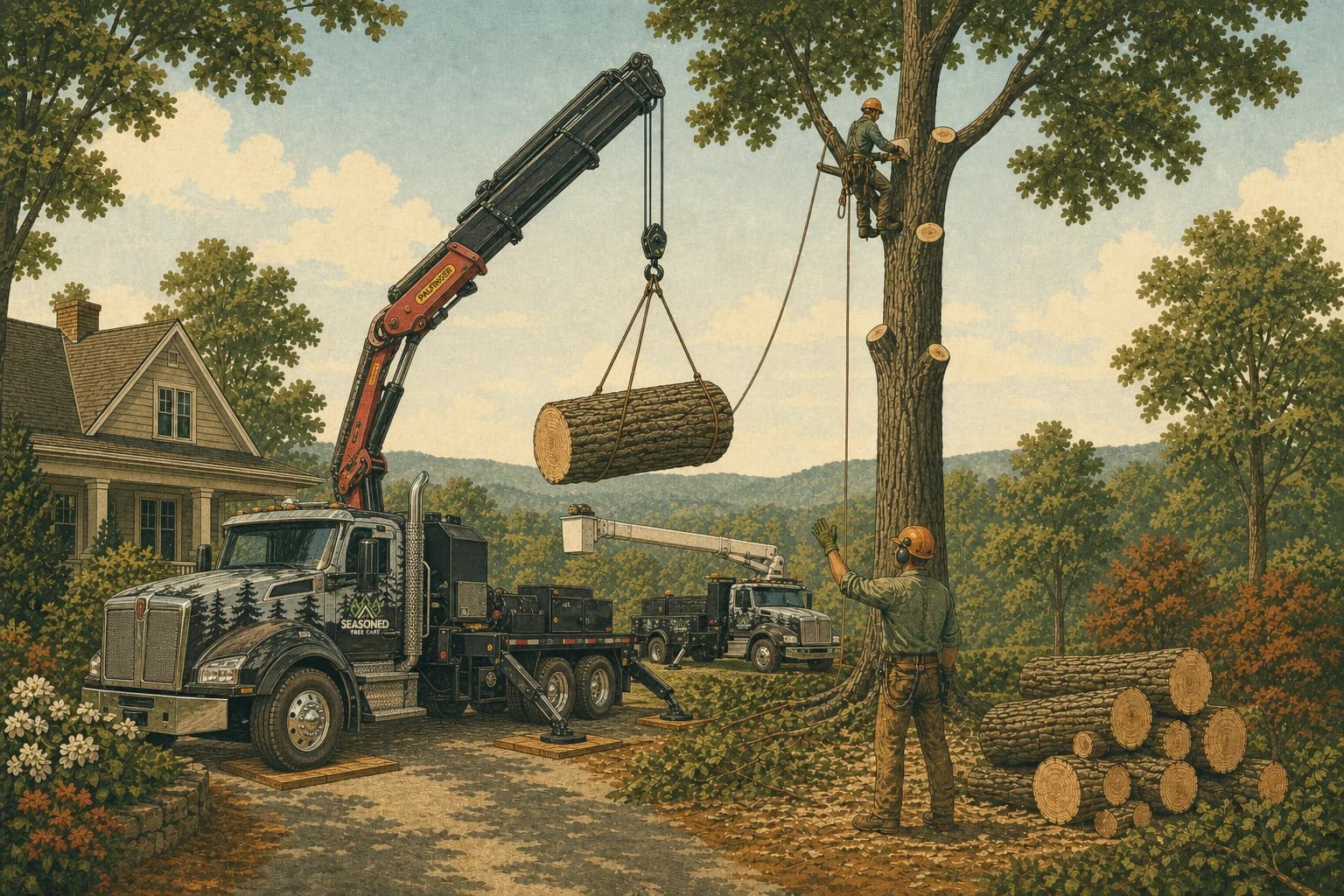
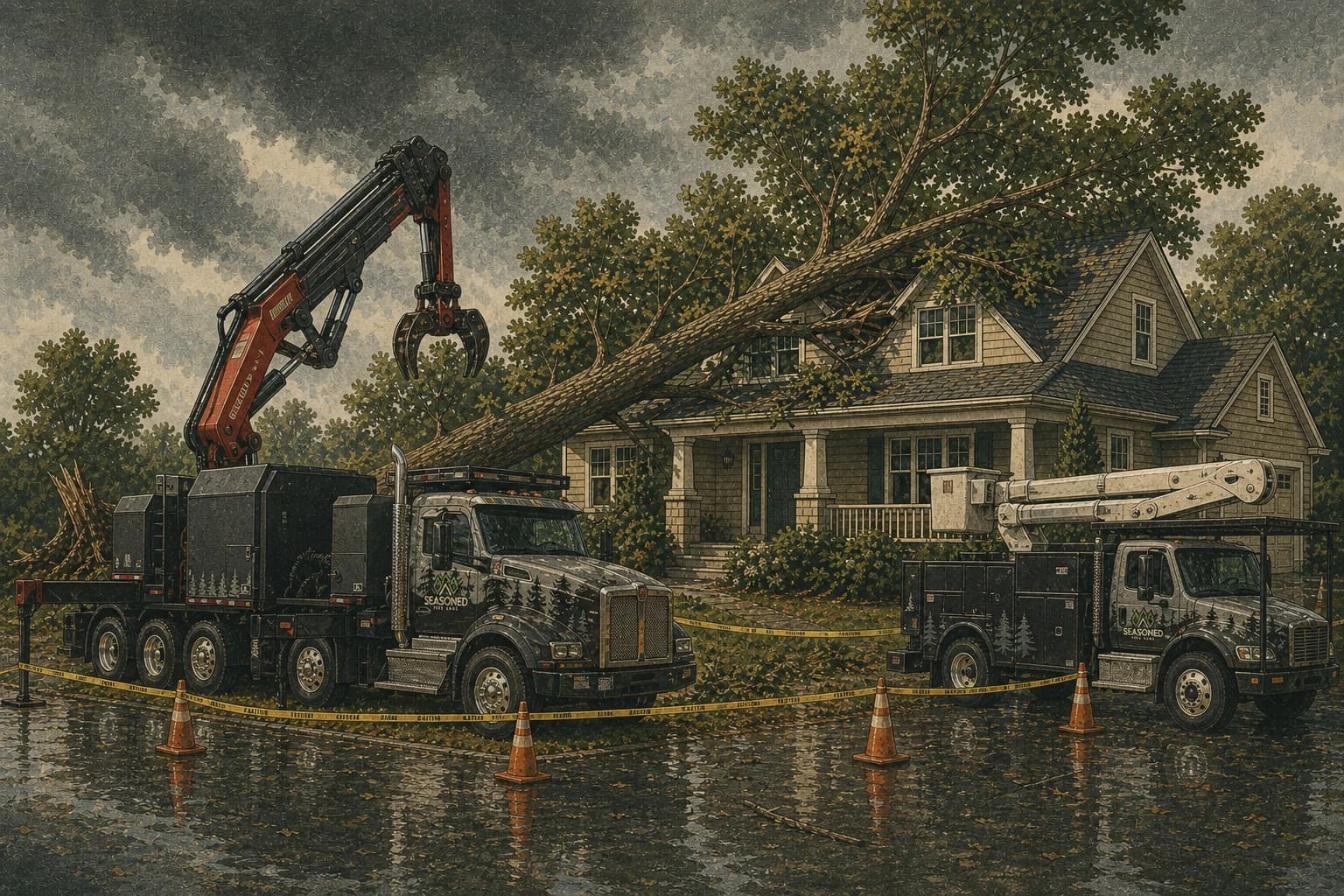
A crane changes the whole equation. Instead of cutting a loaded tree and hoping it goes where you want, the crane takes up the weight of a section before it is cut, then lifts that section straight up off the roof and swings it clear to a drop zone away from the house. The load is supported the entire time, so nothing is dropped onto the structure and nothing is released toward a person. It's the difference between prying a tree off your house and lifting it off.
Section 05What Seasoned Tree Care does on a 24/7 emergency call
When you call our emergency line with a tree on your home, the response follows a deliberate sequence built around keeping people safe and not adding to the damage:
- Secure the scene. We assess the structure, the tree's load, and any utility hazards, and keep people clear of the work area and any lines.
- Plan the lift. We work out the order of cuts and the weight of each section so the tree comes off the house in a controlled way rather than all at once.
- Set up the crane. The Palfinger crane and grapple truck are positioned on firm ground, with outriggers deployed, to lift the heavy wood straight up off the roof.
- Lift the tree off. Each section is supported before it's cut, then carried up and away from the structure to a clear drop zone, never dropped onto the roof.
- Process and clean up. Sections are bucked, brush is chipped, logs are loaded out, and the work area is cleared.
- Document the work. We provide photos and written documentation of the damage and the removal for your insurance claim.
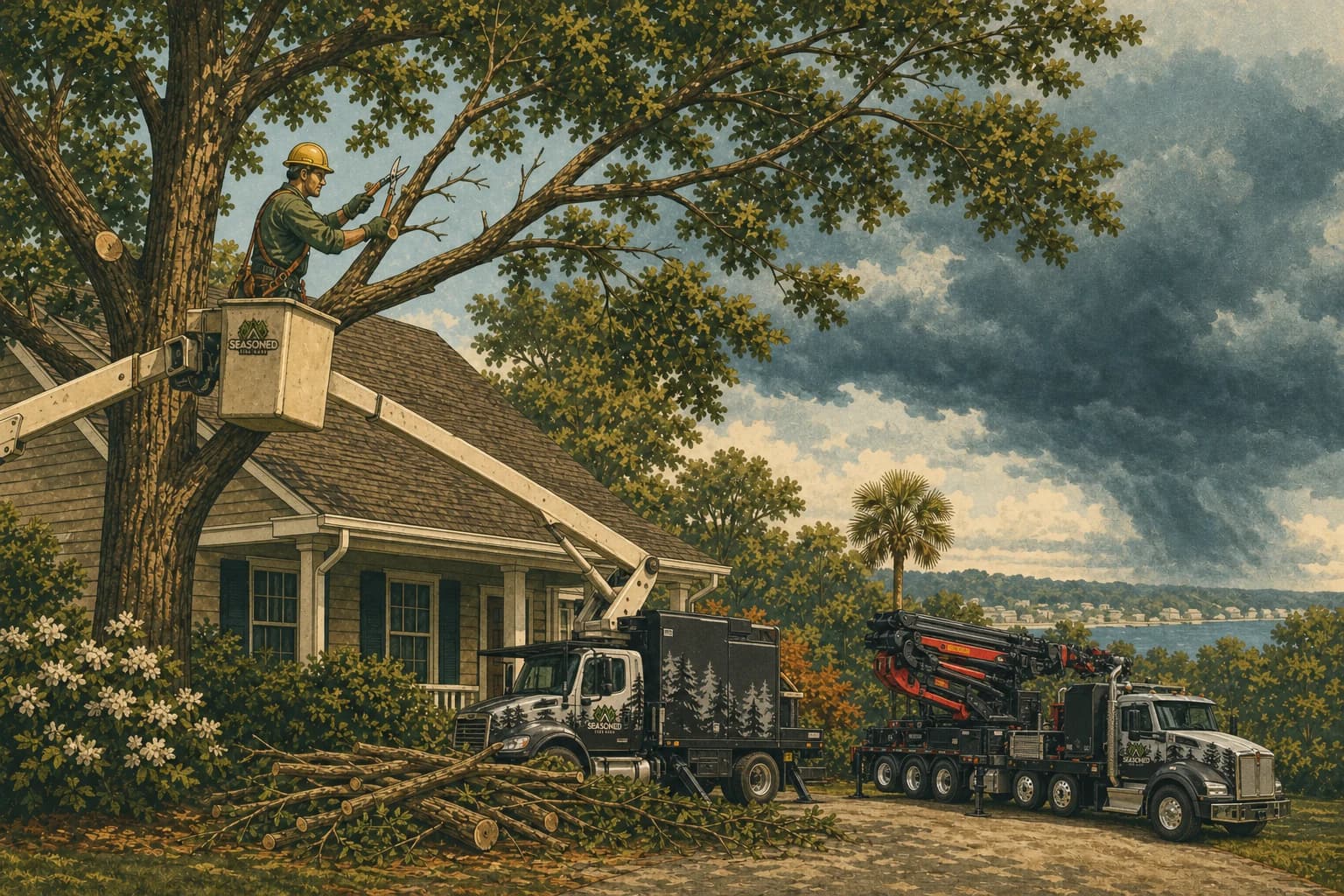
Behind that response is the equipment that makes it possible and the coverage that backs it — the Palfinger crane and grapple truck for lifting trees off structures, and $2 million in liability insurance plus workers' compensation, so the work over your home is covered.
Section 06What not to do
Most of the serious injuries that follow a storm don't come from the storm itself — they come from the cleanup. When a tree is on your house, the following are the things to leave alone:
- Don't climb onto the roof. It just took a load it wasn't designed for, and there can be hidden structural damage and slick debris underfoot.
- Don't cut a tree that's resting on the house. It's under tension and can shift, spring, or drop a section the instant the saw goes through it.
- Don't run a chainsaw alone, on a ladder, or above your shoulders. Storm cutting is some of the most dangerous saw work there is, and it's no place to be by yourself.
- Don't go near downed or contacting power lines, or try to move limbs off them. Keep clear and call the utility and 911.
- Don't reenter an unsafe building. If the structure feels compromised, stay out until someone qualified has checked it.
- Don't wait to call. Securing a tree on a home promptly limits further water damage and gets you in line for emergency crews after a storm.
The South Carolina Forestry Commission's storm-response resources reinforce the same theme: storm cleanup around damaged trees is hazardous work, and the lifting and cutting are best left to trained crews with the right equipment.
Section 07Get a crew headed your way
If a tree is on your home right now, get everyone safe, stay clear of any power lines, photograph the damage, and call. We run 24/7 emergency tree service for Anderson, Greenville, and the wider Upstate, and we bring the crane and crew to lift a tree off a structure without making the damage worse. You can read more about our emergency tree service, see how crane tree removal works for trees over a house, or learn about standard tree removal once the emergency is past.
Tree on your house? Get everyone safe and clear of any power lines, then call our 24/7 emergency line at (864) 762-1253. We'll bring the crane and crew to lift it off and document the damage for your insurance.
Emergency Tree Service →Quick answers
Frequently asked questions
If anyone is hurt, or if a limb is touching a power line, call 911 first, and call your electric utility about the line. Once people are safe and clear, call a tree crew that runs 24/7 emergency service. We answer emergency calls around the clock and can get a crew and the right equipment headed your way to secure the scene and lift the tree off your home.
Not until someone qualified has looked at it. A tree on a roof has added a load the structure was never built for, and there can be hidden damage to framing, ceilings, and walls. Get everyone out of the affected rooms, and if the structure feels unsafe — sagging ceilings, cracking sounds, a leaning wall — leave the house entirely and wait outside. FEMA's Ready guidance advises staying out of damaged buildings until they've been checked.
Only do what you can safely reach from the ground, and only after you've photographed the damage. A tarp thrown over a low section from a ladder is one thing; climbing onto a damaged roof, or cutting a tree that's resting on the house, is another. A tree under load is storing energy and can shift the moment it's cut. Leave anything off the ground, anything near power lines, and any cutting to the crew.
It depends on your policy and the circumstances, and this is general information rather than insurance advice. Many policies are more likely to help when a tree has actually fallen on and damaged a covered structure, but deductibles, limits, and the tree's prior condition all matter. Call your insurer or adjuster, document everything, and ask about your specific situation. We can provide written estimates, photos, and documentation, which is typically what a carrier asks to see.
Because a crane lifts the weight of the tree before any cut is made, then carries each section straight up and away from the house instead of dropping it onto the roof. A tree on a structure is under tension and balanced on the very thing you're trying to protect. Lifting it off with a crane keeps that load controlled the whole way, so the removal doesn't add to the damage that's already there.
We offer 24/7 emergency tree service for Anderson, Greenville, and the wider Upstate, and we prioritize calls where a tree is on a home or blocking access. The honest answer on timing depends on conditions — after a major storm, crews across the area are stretched — but calling early gets you in line and lets us bring the crane, grapple truck, and crew suited to your situation.
Related services & areas
Sources & further reading
- OSHA — Guidance to stay clear of downed and damaged power lines and treat them as energized
- FEMA / Ready — Storm safety guidance on staying out of damaged buildings until they have been inspected
- ISA / Trees Are Good — Why storm-damaged trees under load are unstable and should be handled by trained professionals
- SC Forestry Commission — Storm response and recovery resources for South Carolina trees and woodlands
Published by Seasoned Tree Care LLC. Serving Anderson, Greenville & communities across Upstate South Carolina. This article is general information, not a substitute for an on-site assessment.