Start here
Tree removal in Anderson, SC should be priced around a written scope, not just a tree-height chart. Seasoned Tree Care has a $500 minimum for tree work, with stump grinding as the exception. Our selected Anderson invoices below include a $1,000 maple removal line, a $2,500 crane-assisted water oak removal line and a $3,500 two-tree job. Those are actual recorded charges for those scopes; your estimate depends on the tree and property today.
Section 01Actual Anderson tree removal prices from completed jobs
November 2025
- Invoice price
- $1,000 removal + $300 grinding = $1,300 total
- Recorded scope
- Maple removal, debris removal and a low stump; grinding separately itemized.
- What changes the comparison
- This is an example where the invoice separates the tree and stump work.
December 2025
- Invoice price
- $2,500 removal line; $3,000 whole job
- Recorded scope
- Large leaning water oak with a trunk cavity; crane assistance, debris removal and a low stump in the scope.
- What changes the comparison
- A separate water-oak pruning line was $500. Grinding was not listed.
June 2026
- Invoice price
- $3,500 whole job
- Recorded scope
- Large water oak and black walnut removal, with low stumps and debris removal.
- What changes the comparison
- The scope excluded wood already cut into firewood on the neighboring side. It covered two trees.
| Completion recorded | Invoice price | Recorded scope | What changes the comparison |
|---|---|---|---|
| November 2025 | $1,000 removal + $300 grinding = $1,300 total | Maple removal, debris removal and a low stump; grinding separately itemized. | This is an example where the invoice separates the tree and stump work. |
| December 2025 | $2,500 removal line; $3,000 whole job | Large leaning water oak with a trunk cavity; crane assistance, debris removal and a low stump in the scope. | A separate water-oak pruning line was $500. Grinding was not listed. |
| June 2026 | $3,500 whole job | Large water oak and black walnut removal, with low stumps and debris removal. | The scope excluded wood already cut into firewood on the neighboring side. It covered two trees. |
These selected examples come from Seasoned Tree Care jobs marked closed, with a recorded completion date and a paid invoice. We checked that each invoice belonged to the job shown. Amounts below are the recorded invoice line items in US dollars, not a citywide survey or a current quote. Completion is shown by month; customer names, street addresses and account identifiers are omitted. Bundled services stay bundled because the records do not support inventing a separate price.
Section 02What affects tree removal cost in Anderson
Use the examples to build a scope checklist rather than averaging them. A removal that leaves usable wood on the property and a removal that trucks every log away are different purchases. A mixed pruning-and-removal invoice is also different from a single-tree removal. Our records show that these distinctions matter more than a generic dollar amount per foot.
An Anderson property may have an open yard, a driveway beside the tree or an access route that crosses a landscaped or sloped area. More land does not automatically mean an easy removal. Point out septic components, buried private lines, fences and any part of the property that equipment must avoid. The June example above also shows why the written boundary of debris cleanup matters.
Tree condition
- What we check
- Lean, cavities, cracks, dead branches and neighboring trees.
- What to discuss at the estimate
- Whether the tree can support the proposed work method; condition cannot be diagnosed from price alone.
Access and work area
- What we check
- Driveway, gates, slope, soil, setup point and debris route.
- What to discuss at the estimate
- Where equipment can stand and which surfaces or underground features need protection.
Buildings and lines
- What we check
- Roof, pool, fence, service lines and adjacent property.
- What to discuss at the estimate
- A removal method and any utility or access coordination before work starts.
Wood and brush
- What we check
- Volume, processing, loading and what the owner wants to keep.
- What to discuss at the estimate
- Which material is hauled, chipped on site or left in agreed lengths.
Stump finish
- What we check
- Cut height, grinder access and what you plan to do afterward.
- What to discuss at the estimate
- Grinding depth, chips, backfill and surface roots are separate details.
| Cost driver | What we check | What to discuss at the estimate |
|---|---|---|
| Tree condition | Lean, cavities, cracks, dead branches and neighboring trees. | Whether the tree can support the proposed work method; condition cannot be diagnosed from price alone. |
| Access and work area | Driveway, gates, slope, soil, setup point and debris route. | Where equipment can stand and which surfaces or underground features need protection. |
| Buildings and lines | Roof, pool, fence, service lines and adjacent property. | A removal method and any utility or access coordination before work starts. |
| Wood and brush | Volume, processing, loading and what the owner wants to keep. | Which material is hauled, chipped on site or left in agreed lengths. |
| Stump finish | Cut height, grinder access and what you plan to do afterward. | Grinding depth, chips, backfill and surface roots are separate details. |
Section 03When a crane changes the estimate
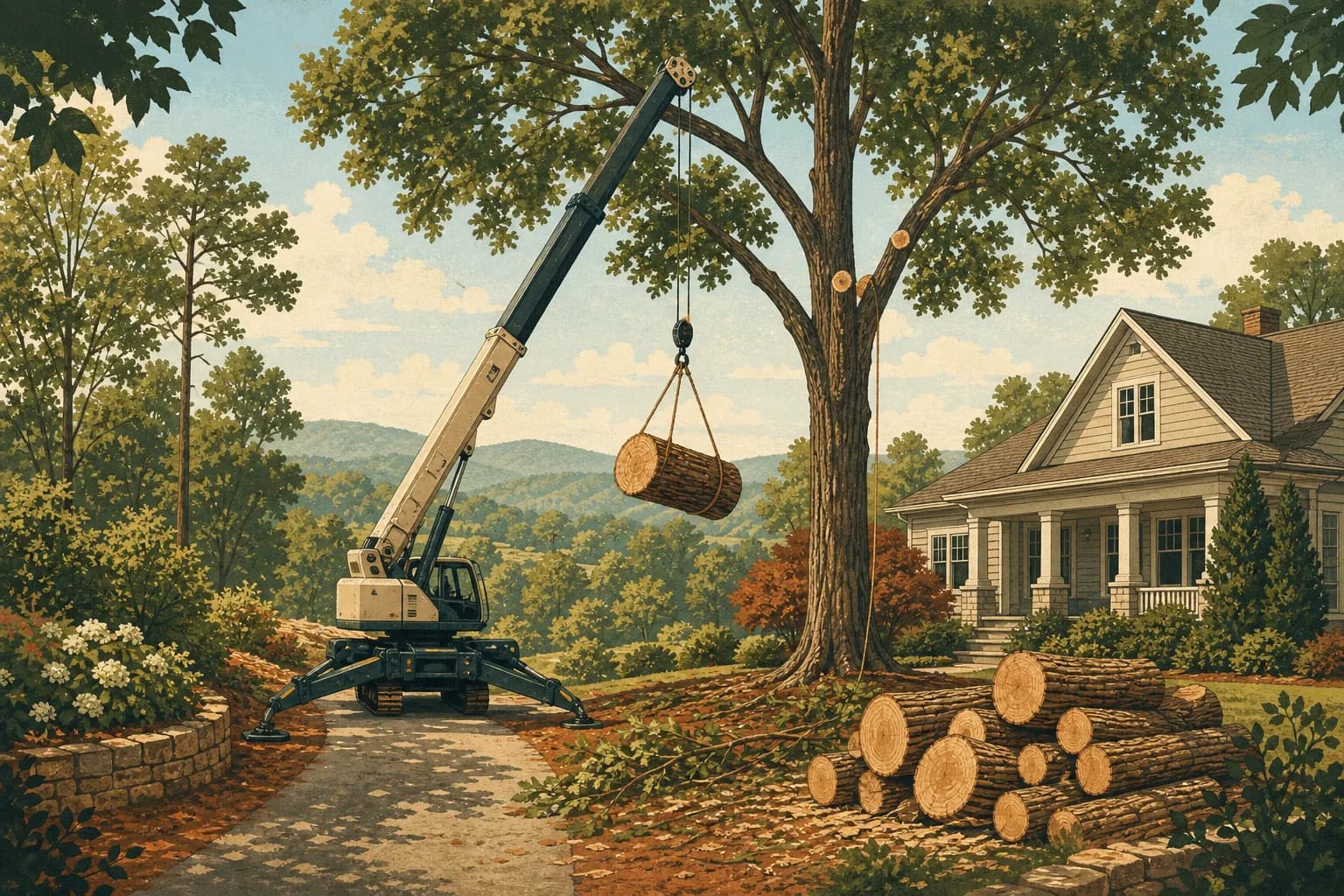
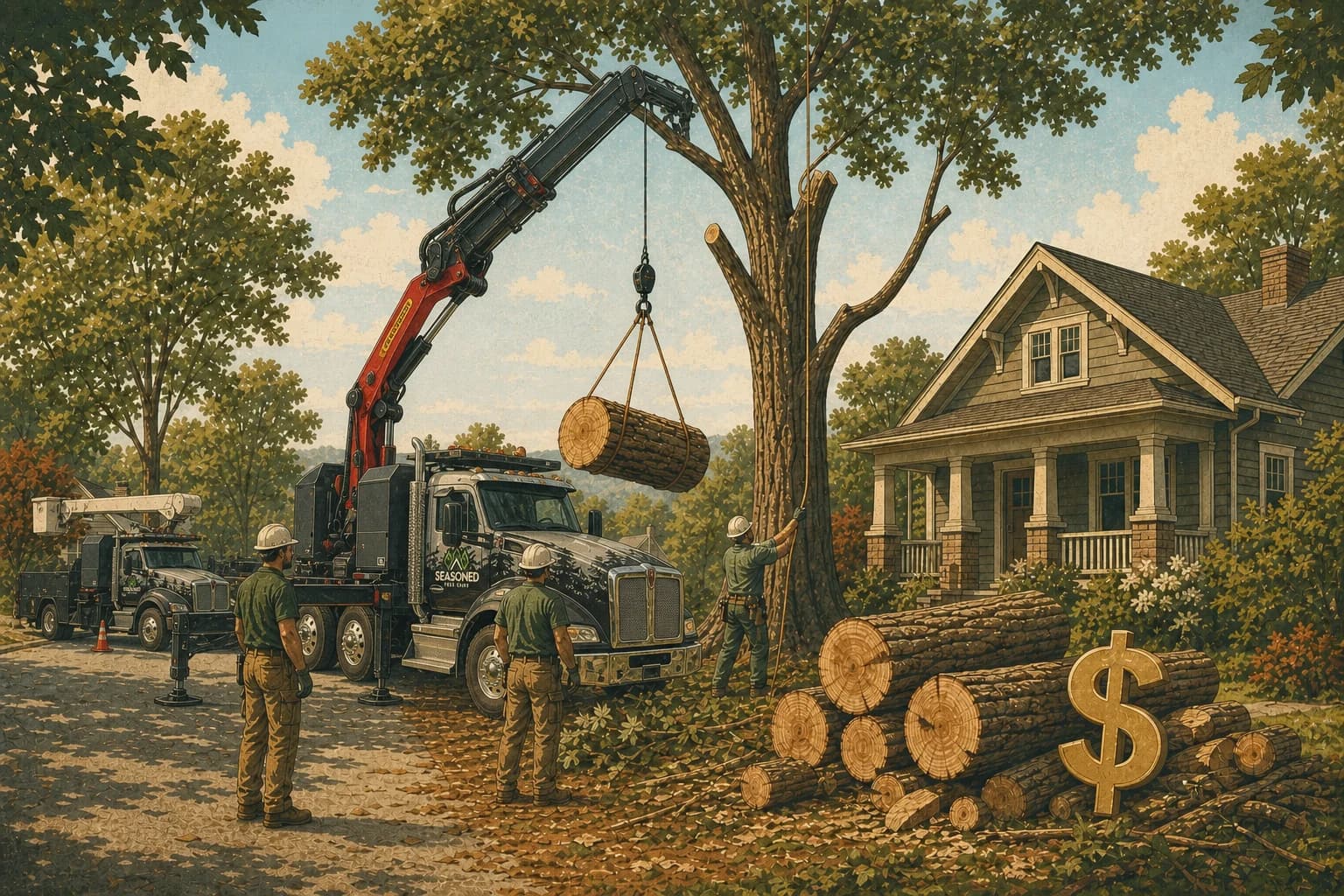
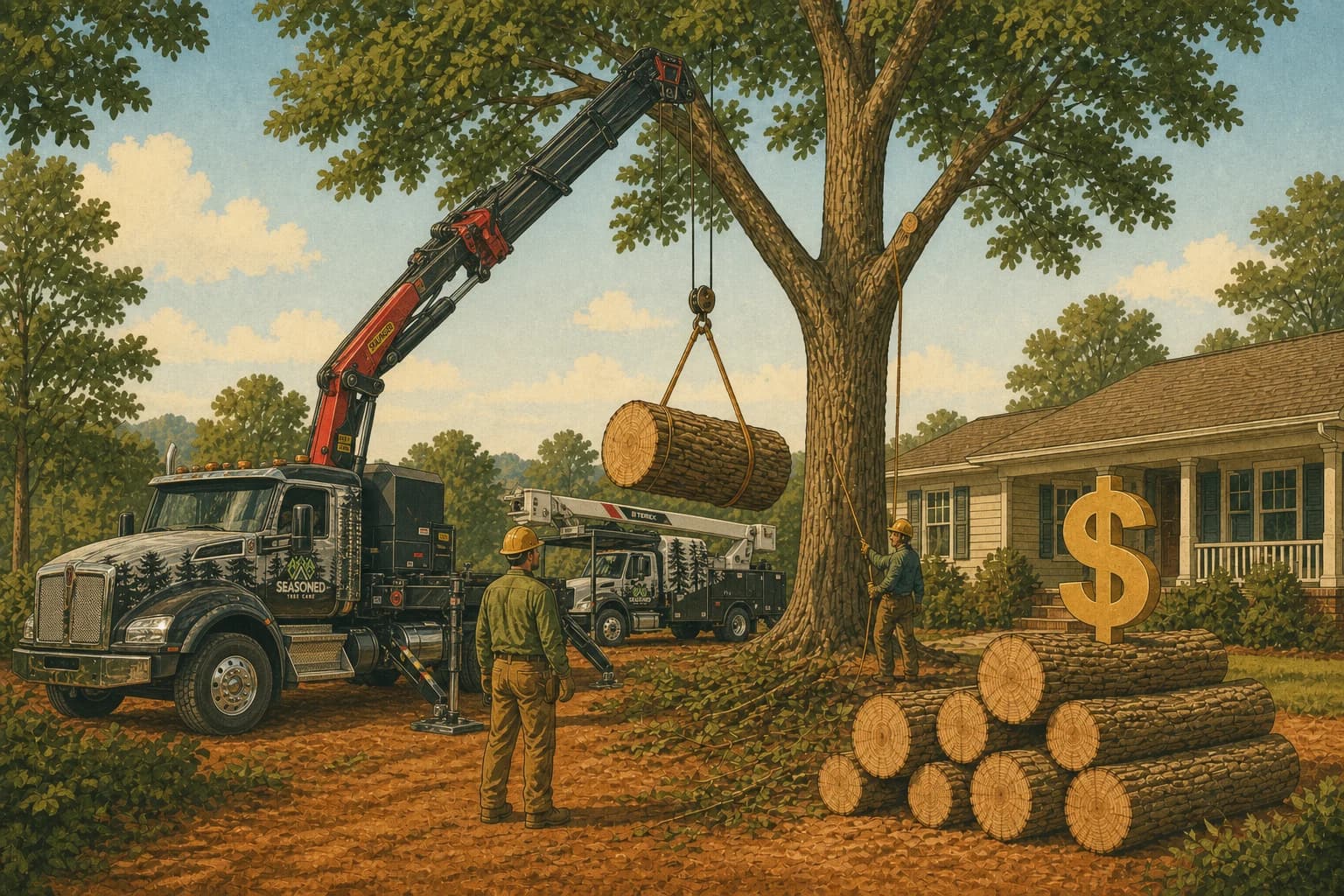
A crane may be considered when heavy sections cannot be lowered through a practical landing area, or when tree condition changes the available methods. Equipment setup adds a cost, but a different removal method can also change crew time and handling. Neither “crane always costs more” nor “crane always costs less” is a sound way to compare bids. Ask what method the estimate includes and why it suits the property.
Our crane tree removal guide shows field footage, a real invoice breakdown and a homeowner access checklist. A narrow gate does not automatically rule out a crane: the setup might be elsewhere, if reach, load capacity and the site allow it. A driveway that fits the truck does not automatically make it a suitable setup point.
Section 04Cleanup and stump grinding: what is included?
The May Greenville invoice separates $800 for removal with retained wood from $200 for grinding. The November Anderson invoice separates $1,000 for removal and debris hauling from $300 for grinding. These are individual historical examples, not a universal stump rate. The difference shows why a total price without the finish description is incomplete.
Ask whether stump chips stay, whether excess chips leave, whether soil is supplied and who handles seeding or replanting. “Cut to a low stump” does not mean the stump is ground. “Grind below grade” does not mean all roots are extracted. See the stump-grinding cost guide for itemized examples and the cleanup guide for finish options.
Section 05More completed work and what it teaches
Past work, summarized from completed jobs with paid invoices. Customer names and street addresses are omitted. Descriptions reflect the recorded scope; they are not independent condition reports.
Completed December 2025
Leaning water oak removal near a house
A large leaning water oak with a trunk cavity was listed for removal at this Anderson home. Crane assistance, debris removal and a low stump were part of the removal plan. A different water oak was retained and pruned for house clearance and low-growing branches.
A removal plan and a pruning plan can serve different trees on the same property. Ask which tree can be retained and what stump finish is included.
See the local project report →Completed October 2025
Cypress removal with oak and maple pruning
This Anderson job combined removal of nine Leyland cypress trees with pruning on retained oaks and maples. The pruning addressed deadwood, damaged branches and clearance near the house. Grinding selected cypress and older stumps was also included.
An estimate for several trees should distinguish removals, pruning on trees you are keeping, and each stump to be ground.
See the local project report →Section 06Compare two estimates on the same scope
- Identify each tree and whether it will be removed or retained and pruned. Do not accept one vague line for “tree work.”
- Compare the included removal method, equipment access and any arrangements needed for neighboring or street access.
- Write down the wood, brush and stump finish. Match haul-off, grinding and site restoration before comparing totals.
- Ask for current insurance documentation and who performs the work. Use our hiring checklist to organize the questions.
- Confirm the total, payment terms and how extra work must be approved. Keep a copy of the written scope before scheduling.
A homeowner can sometimes reduce handling by keeping suitable wood in an agreed location, grouping planned work into one visit or clearing approved access before arrival. Ask what actually changes the price on your property. Do not pre-cut a compromised tree or move material near lines to try to lower a bill.
Section 07Before scheduling in Anderson
Confirm whether the parcel is inside Anderson city limits or in the unincorporated county, and ask the relevant office about any approval needed for the proposed work. Review applicable HOA, easement or development requirements. Permission to enter a neighboring property should be arranged before scheduling.
For a local assessment, visit our tree service in Anderson page. For help comparing providers, use how to choose a tree service. Seasoned Tree Care is based in Honea Path and serves these markets; your estimate should reflect the property, scope and access.
Get the removal, cleanup and stump work priced together for your Anderson property.
Get a written estimate →Quick answers
Frequently asked questions
Seasoned Tree Care has a $500 minimum for tree work, with stump grinding as the exception. Selected paid Anderson invoices in this guide show different removal scopes and separate add-ons. They are historical examples, not an average or a current quote. Tree condition, access, equipment and the agreed cleanup determine your estimate.
Only when the written estimate includes it. Cutting a tree to a low stump is different from grinding. Ask about grinding depth, chips, surface roots, soil and the intended use of the area.
It may reduce hauling, depending on the job. Agree on what wood remains, its location and whether cutting or splitting it is included. The May 2026 Greenville example left wood on site; its $800 removal line should not be compared with a full-haul quote without adjusting the scope.
The table uses selected completed jobs with paid invoices, checked in September 2026. It distinguishes service line prices from whole-job totals. Customer names and street addresses are omitted; the examples do not establish a market average.
A scheduled removal and an emergency can have different access, timing and coordination needs. Ask for the applicable scope and price when the situation is assessed. If there are downed lines or immediate danger, keep away and contact emergency services or the utility as appropriate.
Related services & areas
Published by Seasoned Tree Care LLC. Serving Anderson, Greenville & communities across Upstate South Carolina. This article is general information, not a substitute for an on-site assessment.