Start here
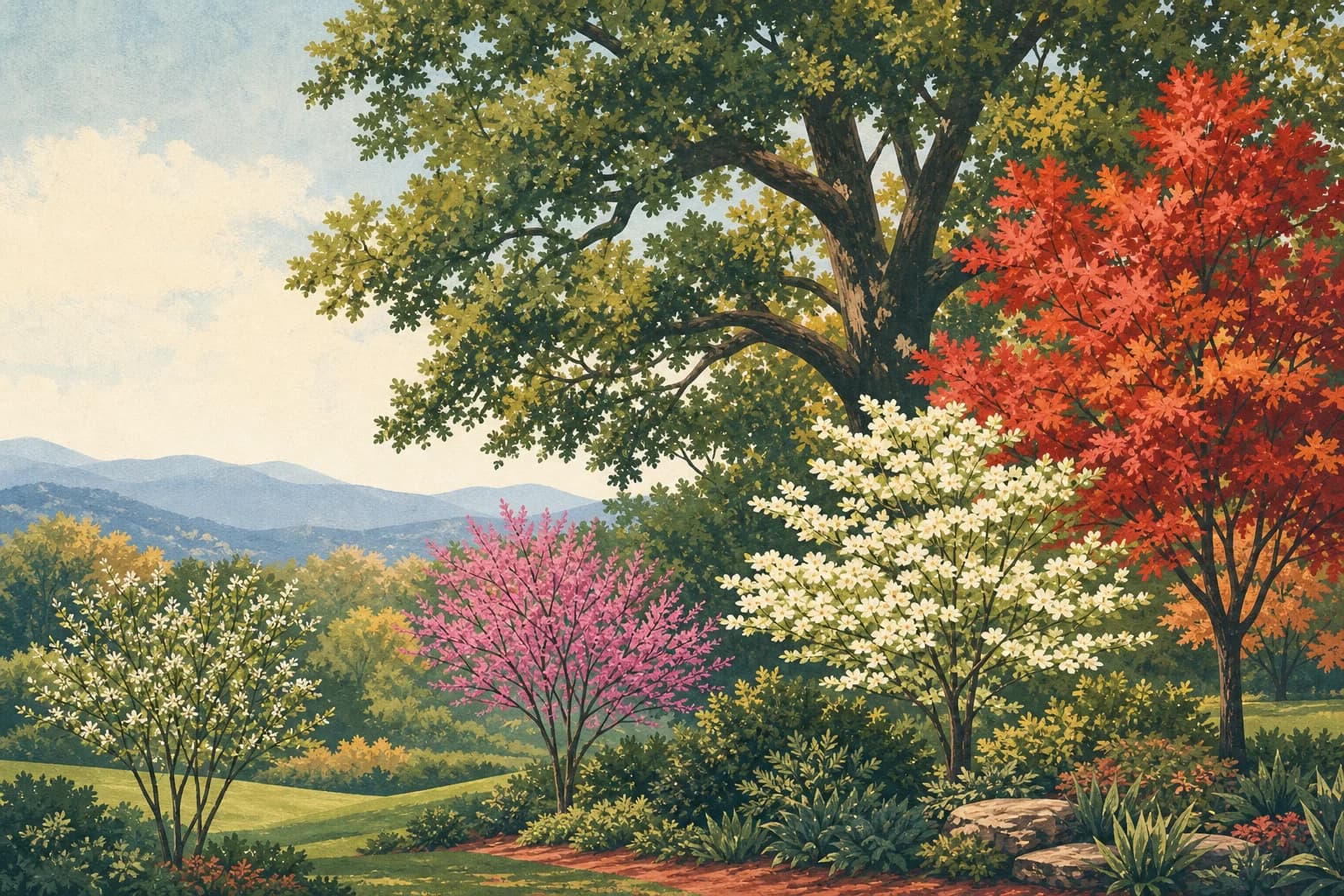
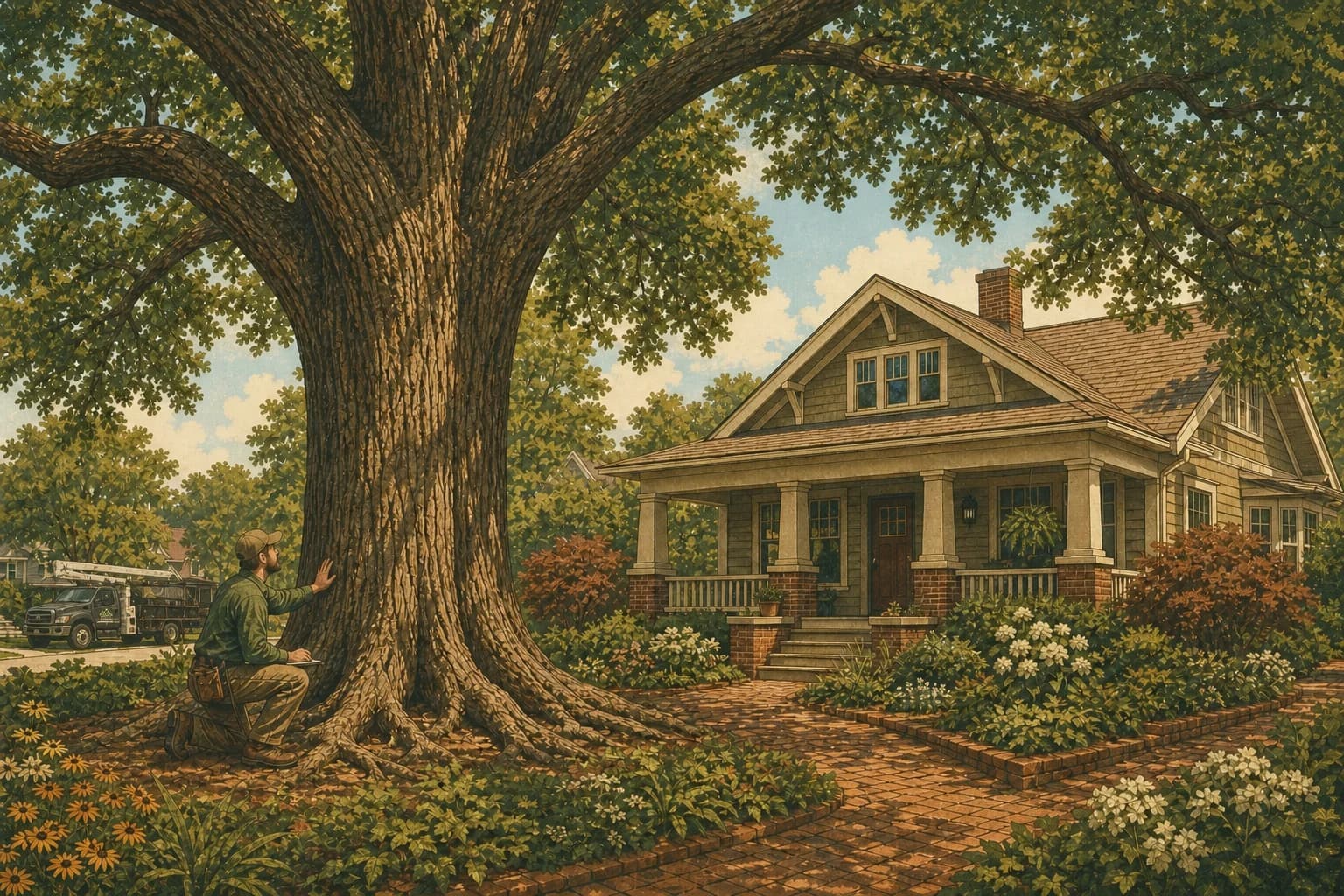
Drive down Augusta Road or through North Main and the trees are the first thing you notice — great arching oaks and poplars that have shaded those streets for generations. They're a huge part of what makes Greenville's older neighborhoods feel the way they do, and they're effectively irreplaceable: no amount of money buys an 80-year-old oak. They're also aging, and they live surrounded by the very houses, driveways, and renovations that put them at risk. Caring for them well is its own discipline.
Section 01Why mature hardwoods need a different kind of care
A young tree is forgiving; a mature one is not. Big hardwoods can't quickly regrow lost roots or recover from heavy-handed pruning, and they carry enormous weight in their limbs — the dense oaks and hickories common across South Carolina's forests are heavy trees. The goal with a mature hardwood isn't to push growth, it's to preserve health and structure and reduce risk, with light, well-judged intervention rather than aggressive work.
Section 02The slow killers of old trees
Construction and renovation damage
This is the big one in Greenville's renovating neighborhoods. Parking equipment over the roots, trenching for utilities, cutting roots for a foundation or driveway, or changing the grade (adding or removing soil) over the root zone can all be fatal — and the cruel part is the delay. A tree damaged during a project this year may look fine and then decline two years later, long after anyone connects the dots. The ISA's guidance on protecting trees during construction is essential reading before any work near a mature tree.
Compaction and paving over roots
Roots need air and water, most of them in the top foot or two of soil and spreading well beyond the canopy. Compacted soil and impervious paving over that zone slowly starve a tree. Keeping a generous, mulched, un-trafficked area around the base does more for an old tree's longevity than almost anything else.
Topping and bad pruning
Topping a mature hardwood is one of the worst things you can do to it — it triggers weak regrowth, opens large wounds to decay, and shortens the tree's life while making it more hazardous. Clemson Extension and the ISA are unequivocal on this. Proper pruning on an old tree is conservative: deadwood removal, targeted reduction of overextended or risky limbs, and clearance where needed, all to ANSI A300 standards.
Section 03A care routine for a mature Greenville hardwood
- Have an arborist assess and prune periodically — deadwood and structure, not heavy thinning or topping.
- Protect the root zone: a wide mulch ring (two to three inches, never against the trunk), no parking, storage, or trenching over the roots.
- Guard the tree fiercely during any renovation or construction nearby — fence the root zone before work starts.
- Water deeply during extended drought; even established trees suffer in a long dry spell.
- Watch for change year to year — new deadwood, cracks, fungal conks, or lean — and get anything new looked at.
Section 04When removal is the right call — and how we protect the property
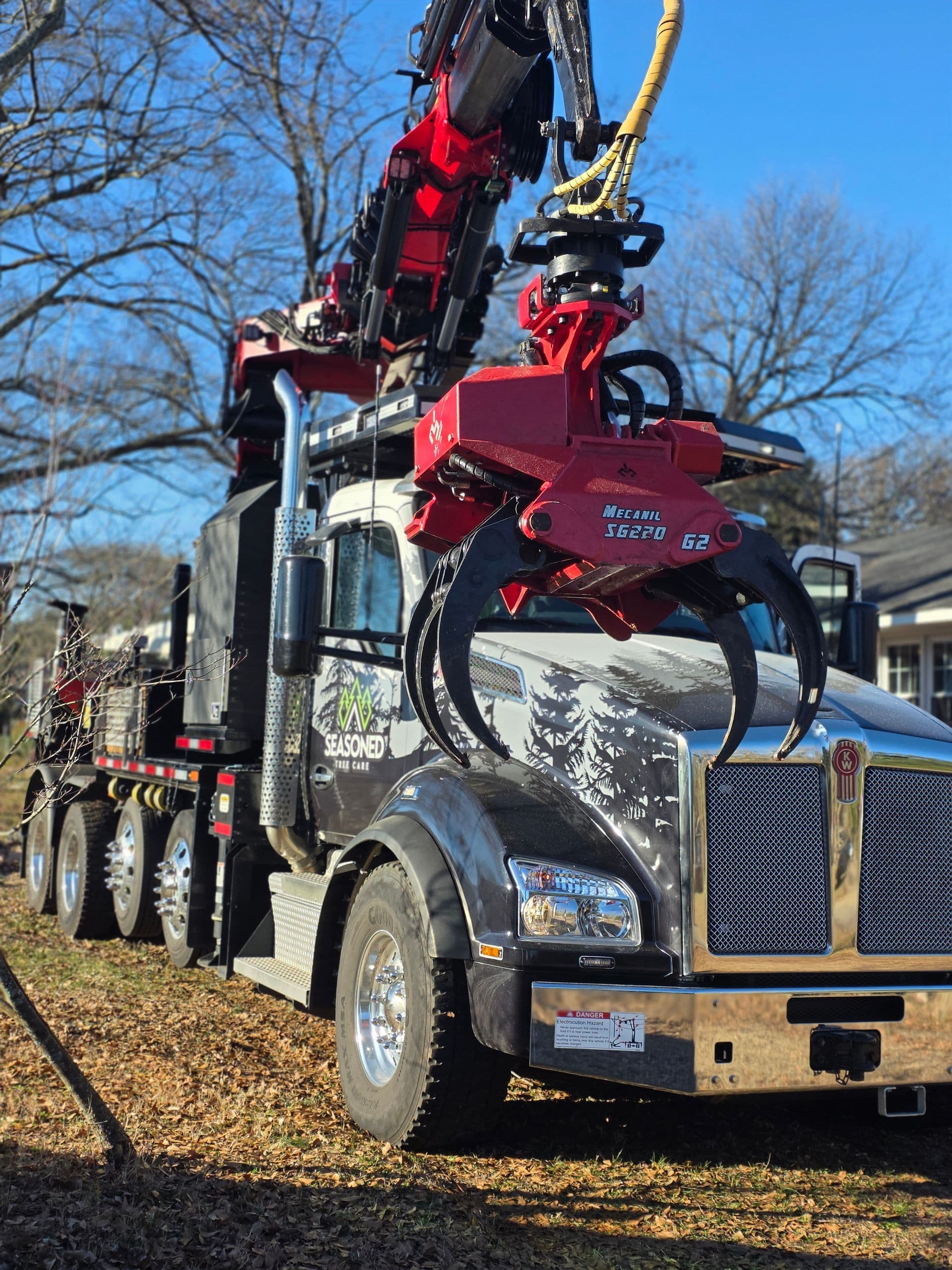
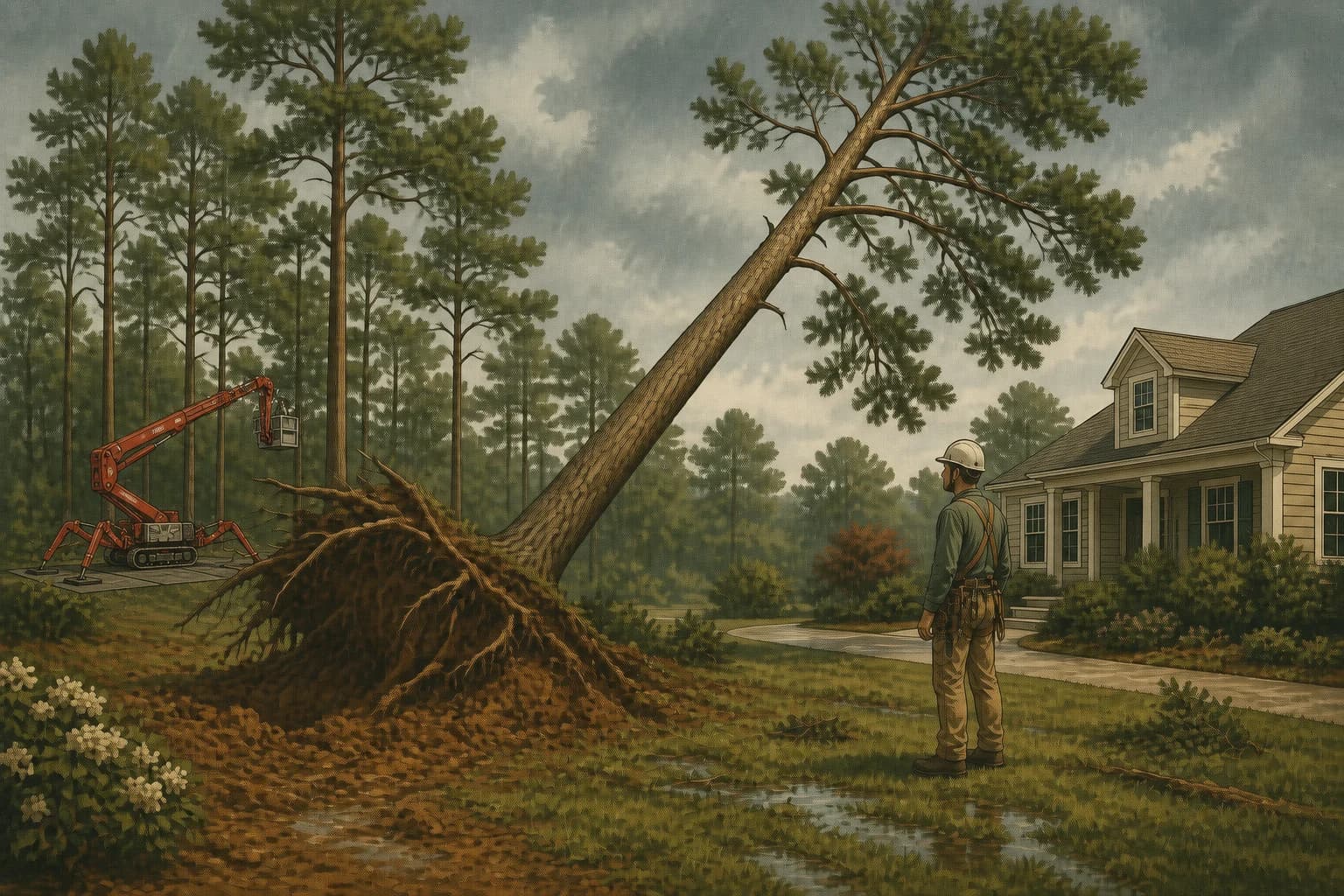
Even with great care, trees reach the end. When a historic hardwood is structurally failing, heavily decayed, or dead, keeping it becomes a liability to the very home it once complemented. On these tight older lots there's almost never room to fell a big tree, so we take it apart instead: rigging and lowering limbs in controlled sections, and using the Palfinger crane to lift large sections up and over the house to a staging area. Turf mats protect lawns and the roots of neighboring trees, and we clean up completely. The aim is to remove the tree without leaving a mark on the historic property around it.
Have a grand old oak or poplar you want to keep healthy — or worry it's becoming a hazard? We'll assess it and give you straight advice.
Schedule a tree assessment →Greenville's canopy is one of the city's quiet treasures, and the mature hardwoods on streets like Augusta Road and North Main are worth the care it takes to keep them. Protect the roots, prune conservatively, watch for change, and bring in a professional when something looks off — and when the day finally comes that one has to go, take it down in a way that respects the home it stood beside. Call (864) 762-1253 to talk through your trees.
Quick answers
Frequently asked questions
Mature hardwoods need less frequent but more thoughtful care than young trees: periodic structural and deadwood pruning by an arborist, protection of the root zone from compaction and trenching, a wide mulch ring (never piled against the trunk), and watering during prolonged drought. Most importantly, avoid the things that quietly kill old trees — grade changes, paving over roots, and topping. Clemson Extension's guidance on established landscape trees is a good reference.
Age and human activity, mostly. Many of these trees are nearing the upper end of their lifespan while sitting feet from homes, driveways, and utilities. Renovations and new construction are a leading culprit — soil compaction, cut roots, and grade changes during a project can doom a mature tree even though the damage doesn't show for a year or two. Storms, decay, and past topping add to the risk.
Warning signs include large dead limbs, cracks or cavities in the trunk or major limbs, mushrooms or conks at the base (a sign of root or trunk decay), a sudden lean or heaving soil, and significant deadwood in the upper canopy. A professional tree risk assessment, following ISA methods, can evaluate the likelihood and consequences of failure and recommend whether the tree can be retained safely with work, or needs to come down.
On Greenville's tight older lots, we rarely fell these trees — there's no room. We rig and lower limbs in controlled sections, and where access allows we use our Palfinger crane to lift large sections up and over the house to a staging area. Turf protection mats guard lawns and root zones of neighboring trees, and we clean up completely. The goal is to remove the tree without damaging the historic property around it.
Related services & areas
Sources & further reading
- Clemson Cooperative Extension Home & Garden Information Center — Caring for established and mature landscape trees in South Carolina
- International Society of Arboriculture / Trees Are Good — Mature tree care, tree risk assessment, and protecting trees during construction
- South Carolina Forestry Commission — South Carolina's hardwood species and forest resources
Published by Seasoned Tree Care LLC. Serving Anderson, Greenville & communities across Upstate South Carolina. This article is general information, not a substitute for an on-site assessment.