Start here
Before accepting a tree-removal estimate, decide what you want to see when the crew leaves. A clear lawn, a pile of usable logs and a low stump are different outcomes. A detailed cleanup scope prevents a low quote from becoming a surprise when the tree is down but material remains.
Section 01The five parts of tree cleanup
Large wood
- Choices to discuss
- Haul away, leave at an agreed spot or cut into agreed lengths.
- Do not assume
- Leaving wood includes splitting, seasoning or stacking firewood.
Brush
- Choices to discuss
- Chip and remove, chip and retain or another expressly agreed arrangement.
- Do not assume
- A branch pile will be accepted by a municipal collection service.
Standing stump
- Choices to discuss
- Cut low, leave a specified height or add grinding.
- Do not assume
- Tree removal includes grinding.
Grindings
- Choices to discuss
- Leave, spread in an agreed area or remove excess material.
- Do not assume
- Grinding includes new soil and a finished lawn.
Final surface
- Choices to discuss
- Define raking, debris pickup, soil, seed, sod or planting.
- Do not assume
- “Clean up” means landscaping restoration of every disturbed area.
| Material or finish | Choices to discuss | Do not assume |
|---|---|---|
| Large wood | Haul away, leave at an agreed spot or cut into agreed lengths. | Leaving wood includes splitting, seasoning or stacking firewood. |
| Brush | Chip and remove, chip and retain or another expressly agreed arrangement. | A branch pile will be accepted by a municipal collection service. |
| Standing stump | Cut low, leave a specified height or add grinding. | Tree removal includes grinding. |
| Grindings | Leave, spread in an agreed area or remove excess material. | Grinding includes new soil and a finished lawn. |
| Final surface | Define raking, debris pickup, soil, seed, sod or planting. | “Clean up” means landscaping restoration of every disturbed area. |
Section 02Real examples: three different finishes
Greenville · May 2026
- What the record says
- An $800 removal line specified chipping brush and leaving wood; grinding was $200 separately.
- Useful lesson
- Retained wood and a grinder visit need their own scope.
Anderson · November 2025
- What the record says
- Maple removal and debris haul-off were $1,000; grinding was $300.
- Useful lesson
- The removal and stump work were separately itemized.
Anderson · June 2026
- What the record says
- A $3,500 two-tree job included low stumps and debris removal, with an exception for neighboring-side wood already cut for firewood.
- Useful lesson
- Even a hauling scope can have a specific material boundary.
| Completed work | What the record says | Useful lesson |
|---|---|---|
| Greenville · May 2026 | An $800 removal line specified chipping brush and leaving wood; grinding was $200 separately. | Retained wood and a grinder visit need their own scope. |
| Anderson · November 2025 | Maple removal and debris haul-off were $1,000; grinding was $300. | The removal and stump work were separately itemized. |
| Anderson · June 2026 | A $3,500 two-tree job included low stumps and debris removal, with an exception for neighboring-side wood already cut for firewood. | Even a hauling scope can have a specific material boundary. |
These selected examples come from Seasoned Tree Care jobs marked closed, with a recorded completion date and a paid invoice. We checked that each invoice belonged to the job shown. Amounts below are the recorded invoice line items in US dollars, not a citywide survey or a current quote. Completion is shown by month; customer names, street addresses and account identifiers are omitted. Bundled services stay bundled because the records do not support inventing a separate price.
Section 03Should you keep the wood?
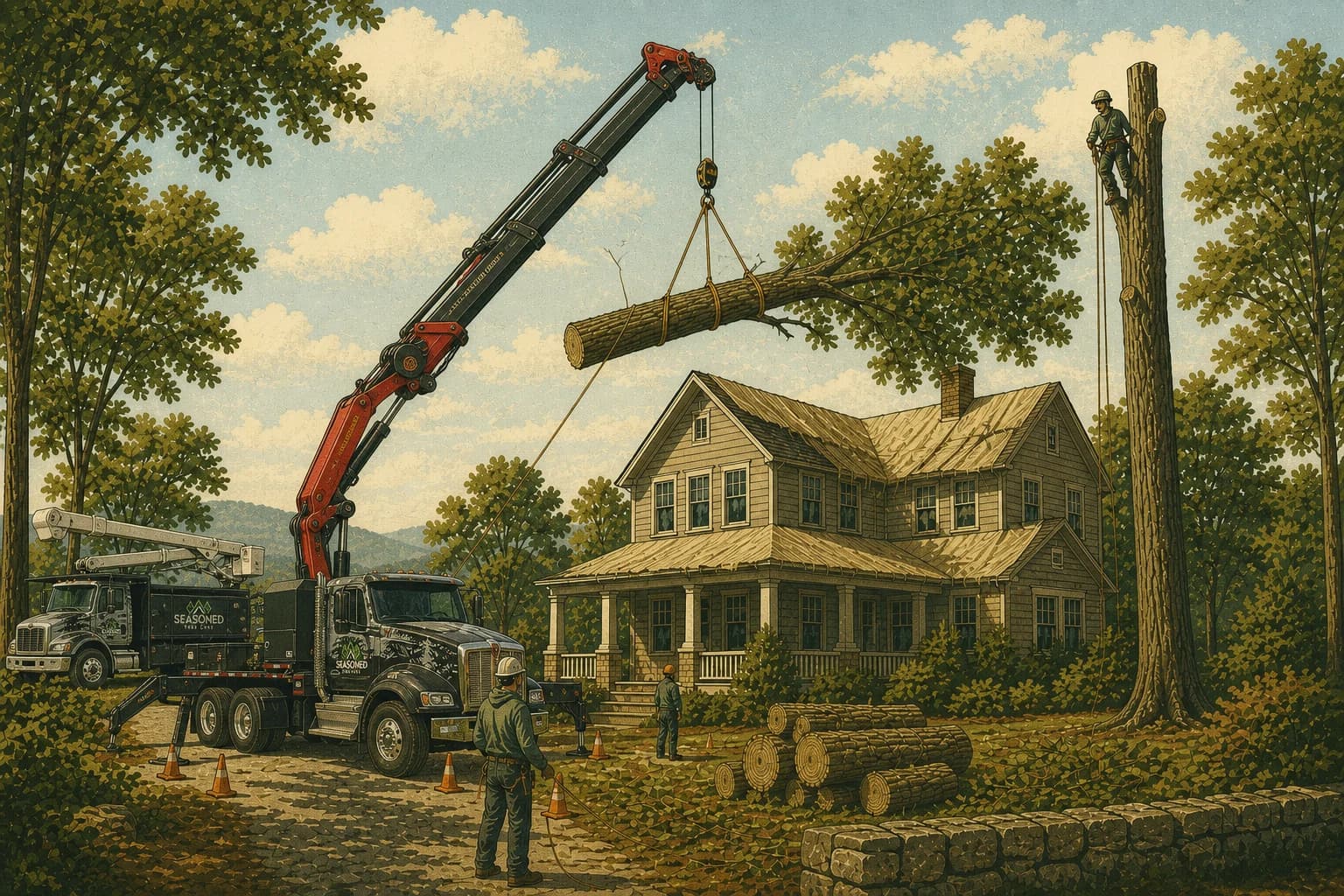
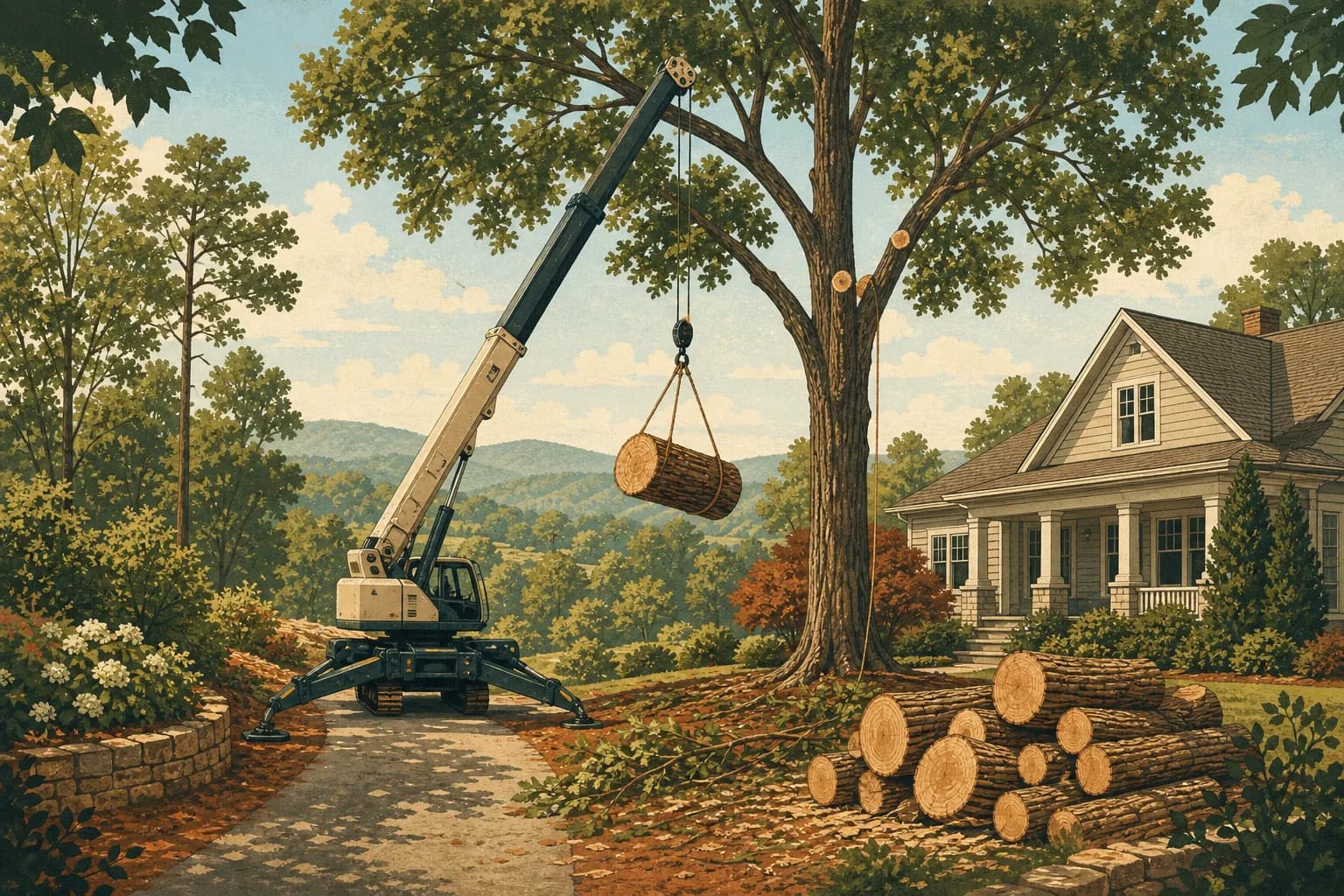
Keeping suitable wood may change handling and hauling, but ask whether it actually changes this estimate. Agree on the material, cutting lengths, pile location and what equipment can place it there. Large rounds can be difficult for a homeowner to move. Do not promise someone else a pile of split firewood when the tree-work scope only says wood will remain.
Point out drive access, gates, paths, drainage and any area that cannot be blocked. If you plan to arrange another person to collect wood, coordinate their access after the tree crew’s active work area is clear. A separate person entering the work zone to collect logs creates a coordination problem.
Section 04What about brush, mulch and stump chips?
Brush chips and the mixed material left from grinding a stump are not the same product. Ask where either will go and whether keeping it fits your landscaping plan. Do not fill a new-tree planting hole with loose grindings and assume it is ready. Our planting guide explains why soil preparation and the new tree’s location matter.
If you intend to use a local yard-waste collection service, verify its current rules for contractor-generated material, log dimensions, placement and scheduling directly with that provider. Your tree quote should not assume public pickup will handle a pile unless those arrangements are confirmed.
Section 05Stump finish: write down the next use
For mowing access, ask about grinding and the surface afterward. For a new tree, discuss remaining wood and suitable planting soil. For a structure, get the builder’s preparation requirements before choosing a stump treatment. See grinding versus stump removal and our stump-grinding cost guide.
Past work, summarized from completed jobs with paid invoices. Customer names and street addresses are omitted. Descriptions reflect the recorded scope; they are not independent condition reports.
Completed September 2025
Pine and water oak removal with stump cleanup
This Greenville job included a large pine and water oak, along with smaller holly, cherry and dogwood removals. A Japanese maple was retained for light pruning and deadwood removal. The stump work included a specific cleanup decision: some grindings from the water oak were removed, while the customer wanted some spread on the property.
Discuss the volume of stump grindings and the finish you want. Keeping some material on site can be a different scope from hauling everything away.
See the local project report →Section 06A useful walkthrough before and after work
- Before work, identify which trees stay and which are removed. Mark the agreed route and material-staging area with the estimator.
- Write down each material choice: wood, brush, standing stump and grindings.
- Confirm the final surface and any restoration that is outside the tree-work scope.
- At completion, compare the site with the written scope. Point out any included material still awaiting removal.
- Keep the invoice and scope together so future planting or site work can account for what was done underground.
You can compare actual scope-and-price examples in our Greenville removal-cost guide and Anderson removal-cost guide. The most useful estimate names the result, not just the activity.
Ask for a removal estimate that explains exactly what stays and what leaves.
Get a written estimate →Quick answers
Frequently asked questions
It depends on the written scope. Some jobs retain wood or chips at the owner’s request. Define what is hauled, what stays and any exceptions before work starts.
It may reduce hauling or handling, but the effect depends on the job. Ask for that option to be priced and specify where the wood goes and whether cutting or splitting is included.
Only when stated. Grinding, removing excess chips, bringing soil, leveling and planting are separate tasks.
Check your actual collection provider’s current rules, especially for contractor-generated material. Do not rely on a general statement that municipal collection will take it.
Related services & areas
Published by Seasoned Tree Care LLC. Serving Anderson, Greenville & communities across Upstate South Carolina. This article is general information, not a substitute for an on-site assessment.