Your lot or Corps land? Check before anything is cut
On your side of the line, it's your tree. Below it, it's the public's, and the Corps decides. We'll help you find the line and the right permit before we cut.
- The shoreline is public land between private property and the 660-foot full-pool line. Painted "witness trees" mark the project boundary, but they only show that the line is close. Knowing where your property line is falls to the landowner.
- Any private use of the public shoreline needs specific authorization. Cutting trees there without a permit is an encroachment and a violation under 36 CFR 327.30.
- Underbrushing needs a Shoreline Use Permit and is limited to your adjacent frontage (up to 100 feet in Limited Development Areas, 50 feet in Protected areas). Only vegetation under 3 inches at ground level may be cut. Larger trees and native ornamentals such as dogwood, holly, redbud and magnolia need prior approval. Limbs may be pruned up to one-third of the tree's height or 18 feet, whichever is less.
- A standing dead or diseased tree on Corps land may be cut only after a Corps ranger inspects and marks it, and only if it's a safety hazard. A dead tree that endangers life or property can be removed under a Specified Acts Permit issued to the adjacent landowner.
- Motorized equipment isn't allowed on public land unless a permit allows it, and herbicides aren't allowed in underbrushed areas.
- Who to call: the Corps' Hartwell Lake office, 706-856-0300 or 888-893-0678, or the shoreline ranger for your area listed on the Corps' Shoreline Management page.
What we do on Hartwell lots
On your side of the line, our Hartwell work includes removing dead and wind-thrown trees at the water's edge, clearing downed trees off cart paths and away from docks, raising canopies for a lake view, and taking down leaning pines before they reach the dock or the house. Below the line, we only cut trees the Corps has marked or approved under a permit. We've removed trees on shoreline managed by the U.S. Army Corps of Engineers with the Corps' approval.
See tree removal and tree trimming.
Wind off open water and soft banks
Wind tracks unbroken across the open water and hits shoreline hardwoods and pines harder than the same tree would take in a sheltered neighborhood. At the waterline, changing pool levels work the soil on soft, sloped banks, so root plates loosen and trees lean toward docks, seawalls and the water. After a wet spell, saturated ground can let a leaning tree go quickly.
Read signs a tree needs removal.
Getting equipment in without hurting the bank
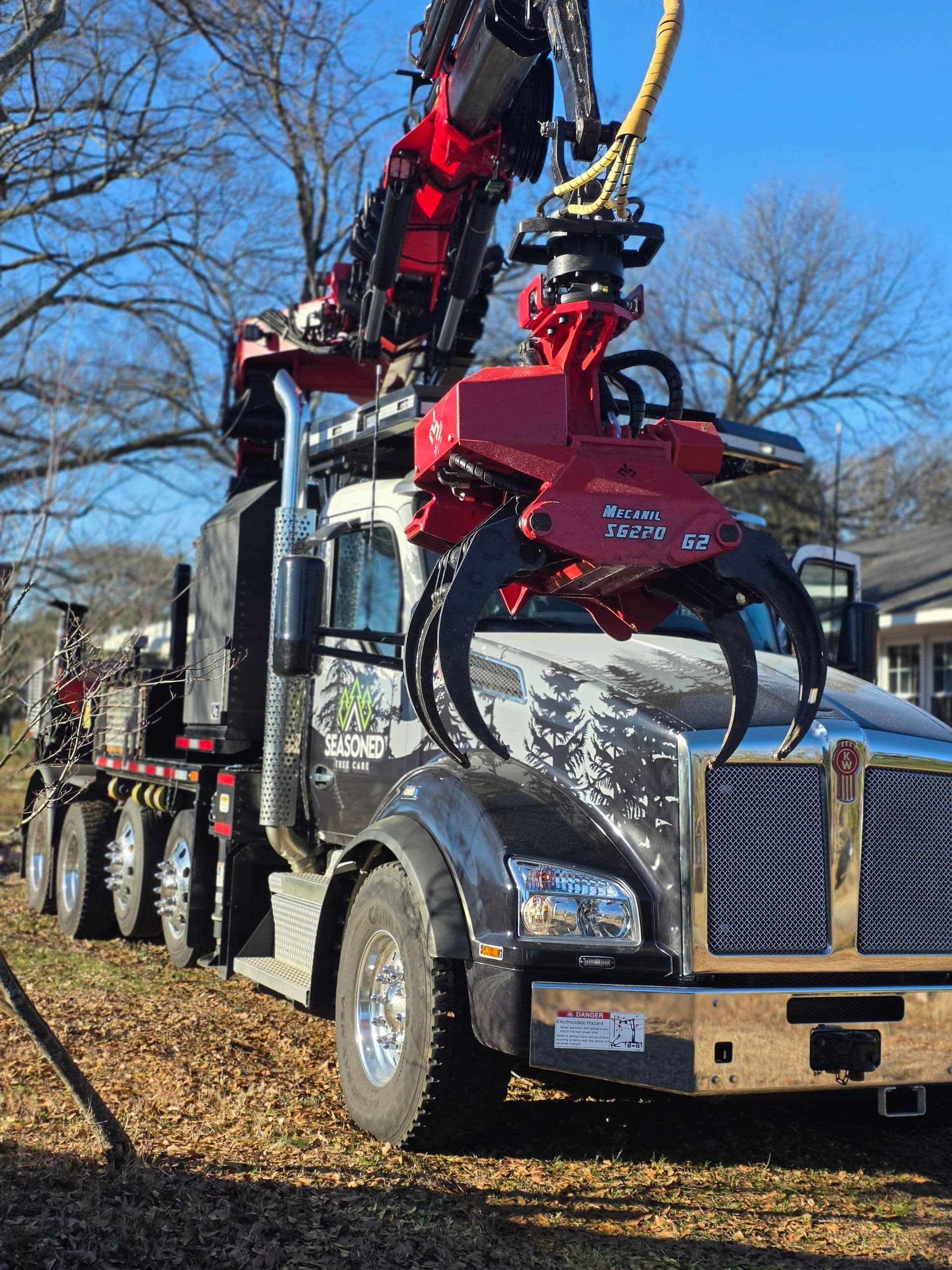
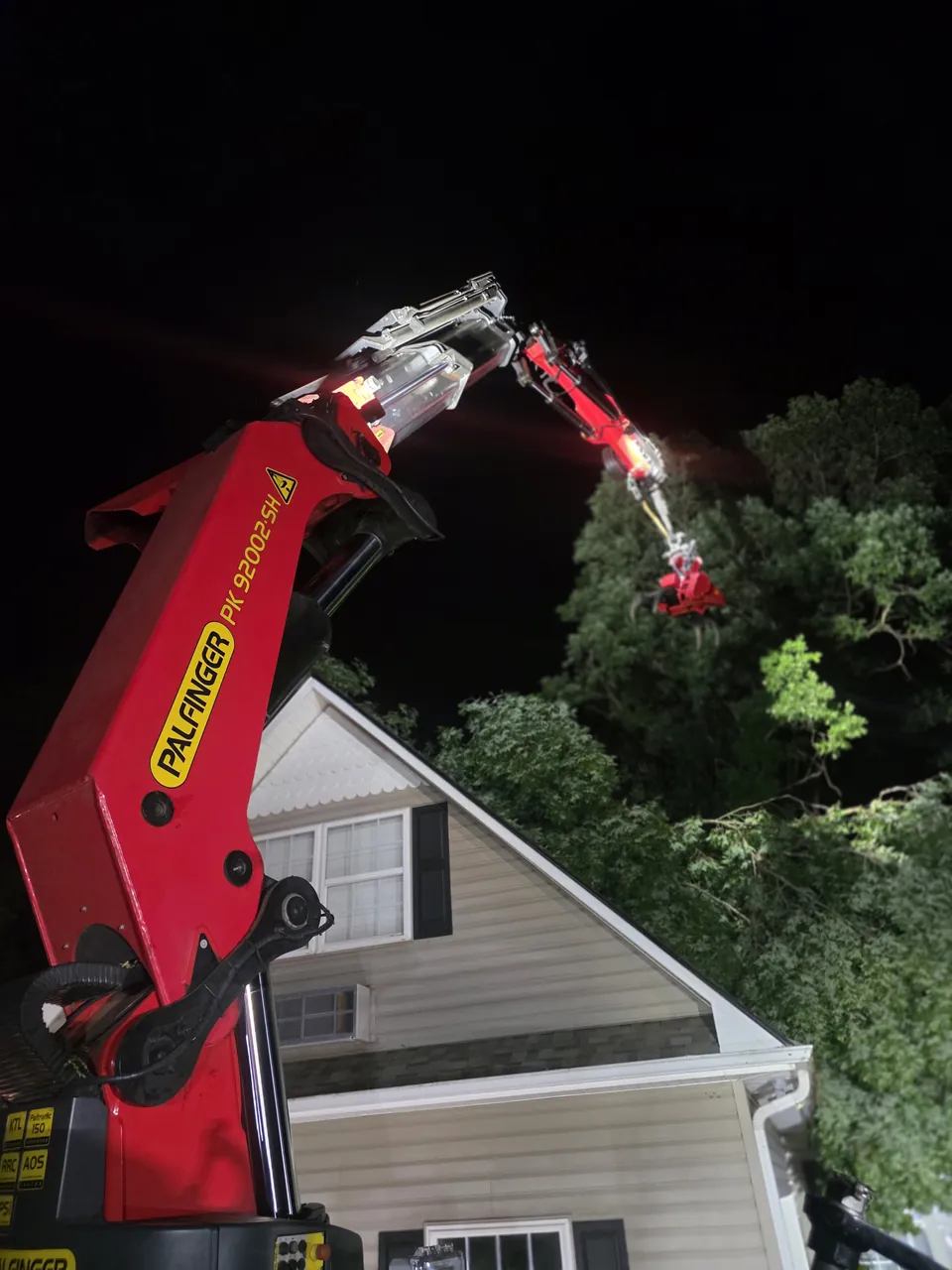
We work from your property, because the Corps doesn't allow motorized equipment on public land without a permit. Turf mats spread the weight on the way in and out, and we rig and lower sections under control so wood doesn't end up in the water. When a lakefront tree is too big or too close to rig down, the crane lifts it out.
See crane tree removal and crane tree removal, explained.
Storm cleanup on the lake
Storms track across the open water and hit waterfront trees hard. We clear fallen trees off homes, docks and cart paths, and stay clear of downed lines. On Corps land, the Corps' rules still apply after a storm.
See 24/7 emergency tree service and storm-season tree prep.
Shoreline towns
We cover lakefront property in Anderson, Townville, Pendleton, Clemson and Fair Play, with the Oconee side covered from our Oconee County and Seneca pages. Lake Keowee has different shoreline rules, set by Duke Energy.
Source for the shoreline rules above: U.S. Army Corps of Engineers, Hartwell Lake Shoreline Management Plan (DP 1130-2-18, November 2020).